What Guests Actually Keep: The Psychology of Take-Home Experiences at Events
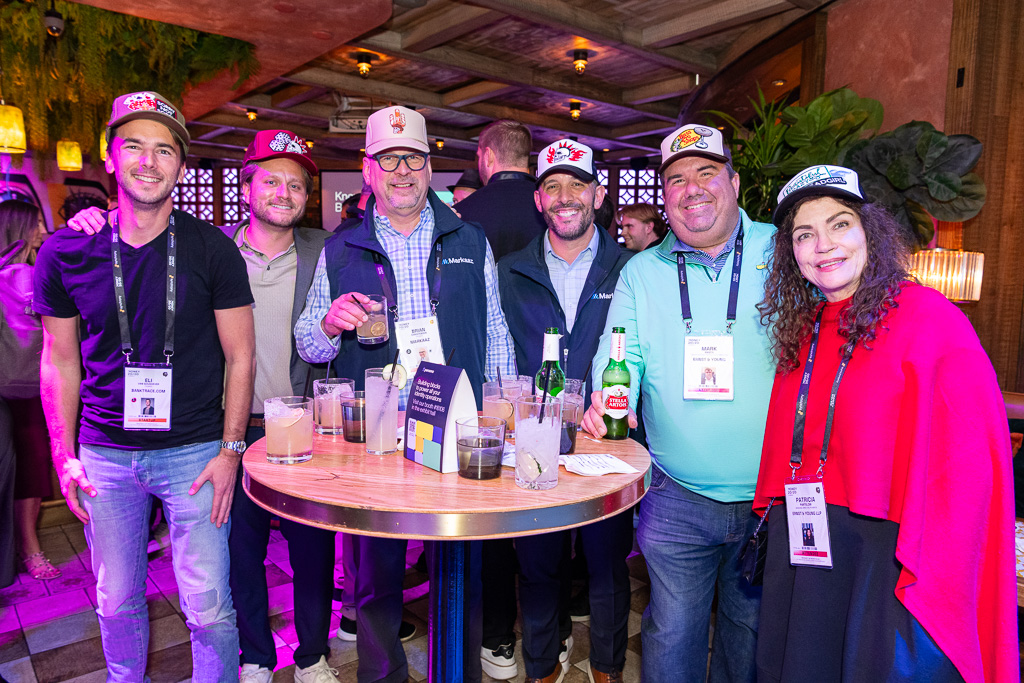
Most event favors are chosen with good intentions. They match the color palette, fit the budget, and look polished on a table. Then the event ends, guests gather their things, and a surprising number of those favors stay behind.
That gap between given and kept is where event strategy gets interesting.
When planners think about take-home event favors as part of the guest experience, not just the décor or gift line item, the results change. People tend to keep objects that feel personal, useful, and connected to a moment they enjoyed. When they help create the item themselves, the effect becomes even stronger.
Why Most Take-Home Event Favors Fail
A favor can be attractive and still forgettable. Guests make quick decisions at the end of an event: Is this easy to carry? Will I use it again? Does it feel like mine, or like something that could belong to anyone?
That is why generic swag often struggles. A candle with no emotional tie, a plastic trinket, or a logo item with limited use may look fine in the planning stage but carry very little meaning once the music stops.
The favors that tend to survive the ride home usually share a few qualities:
- useful
- personal
- easy to transport
- connected to the event itself
- worth showing to someone later
This is not just a style issue. It is a memory issue.
The Psychology of Ownership in Take-Home Event Favors
Consumer psychology gives planners a strong clue here. A well-known concept called the endowment effect describes a simple tendency: once people feel they own something, they value it more than they did before it belonged to them. Research reviews indexed by PubMed also point to memory bias and the mere ownership effect as major reasons this happens.
That matters for take-home event favors because ownership is not only about possession. It is also about participation.
If a guest picks the color, adds the patch, chooses the band, or decides on the final look, the object stops being “the event favor” and starts becoming “my hat,” “my bag,” or “the one I made at that party.” The language changes because the mental relationship changes first.
People keep what feels like theirs.
This is where many standard favors miss the mark. They are distributed, not claimed. They are received, not shaped. A guest may appreciate the gesture, but appreciation alone does not always lead to long-term use.
Experiential Purchases Create Longer-Lasting Value
Another useful idea comes from research on experiential purchases. Studies have found that people often get more enduring happiness from experiences than from purely material purchases. The reason is intuitive. Experiences invite emotion, conversation, storytelling, and anticipation. They often become part of identity.
A take-home favor works best when it sits at the intersection of both categories: it is an object, but it is tied to a lived moment.
That combination is powerful. The item becomes a physical reminder of something social and enjoyable. Instead of handing out a finished product at the end, planners can give guests a chance to make, choose, or personalize something during the event. The favor then carries memory, not just material value.
Research on savoring also supports this. People who are good at savoring tend to get more happiness from experiences, and events are built for that kind of response. A thoughtful take-home item extends the savoring window. The guest sees it later, wears it again, and mentally revisits the event in a positive way.
Positive Memory Rehearsal Makes Event Favors More Memorable
Memory is not fixed the moment an event ends. Positive experiences are often revisited in conversation, photos, and social posts. Research on memory rehearsal has shown that positive events are remembered with greater vividness and more rehearsal than negative ones. In one study, fans remembered a winning game more accurately than a loss, and that stronger memory was linked to replaying the event in their minds afterward.
For event planners, this is more than an academic point. It suggests that a good favor can act like a trigger for future recall.
A disposable item rarely gets that chance. A wearable keepsake, on the other hand, may be seen repeatedly in a closet, on a hook, in a mirror, or in a photo feed. Every repeat encounter gives the original event another small burst of life.
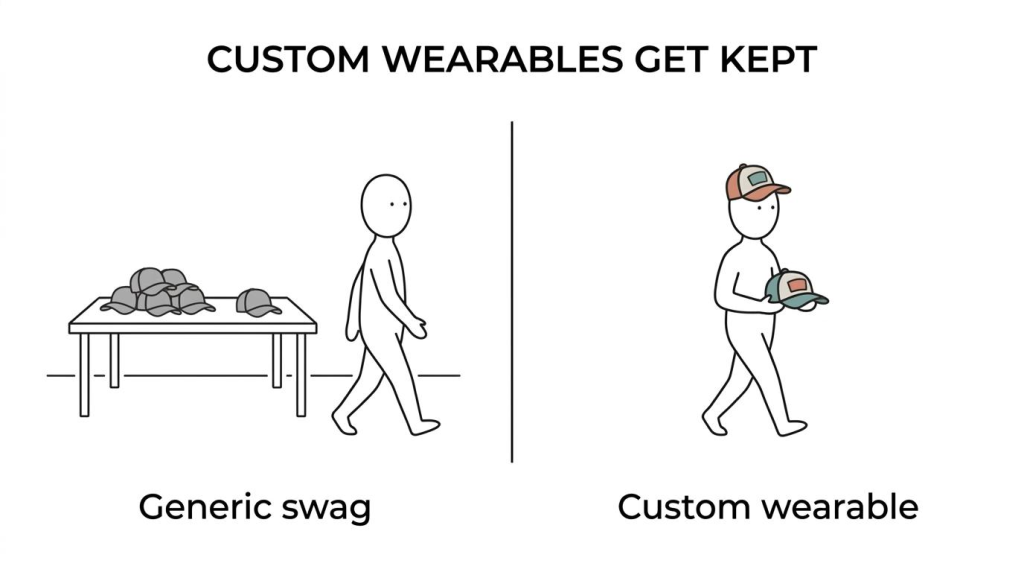
Side-by-side comparison of generic event favors and custom wearable keepsakes across ownership, reuse, photo value, and memory trigger.
This is why the best take-home event favors do not only “match the theme.” They support positive rehearsal after the event.
Wearable Keepsakes vs Traditional Event Favors
Wearable keepsakes deserve special attention because they stay visible. Guests interact with them in real time, others comment on them, and they often appear naturally in photos. A wearable also travels through the event before it travels home.
That social visibility creates momentum. When one guest is wearing something custom, others notice. Conversation starts. Photos improve. The favor becomes part of the atmosphere, not just the exit table.
Here is a simple comparison planners can use when evaluating common take-home event favors:
| Favor type | Ownership feel | Reuse after event | Photo value at event | Memory trigger later |
|---|---|---|---|---|
| Pre-packed candy or snack | Low | Low | Low | Low |
| Standard branded tumbler | Moderate | Moderate | Low | Moderate |
| Printed photo strip | Moderate | Moderate | High | High |
| Custom wearable keepsake | High | High | High | High |
A wearable activation often performs well because it checks several boxes at once. It is practical, visible, expressive, and easy to connect back to the event.
Why Custom Hat Bars Work as Take-Home Event Favor Experiences
Among wearable keepsakes, custom hats stand out because they combine utility with creativity. A hat is not a tiny souvenir that disappears into a drawer. It is functional, highly visible, and easy to style in different ways. Guests can wear it during the event, take photos in it, and keep using it long after the night ends.
A mobile custom hat bar builds an experience around that idea. Guests choose a hat style, add bands, patches, pins, branding, or embellishments, and leave with something that feels unmistakably personal. The format is interactive, guided, and social, which makes the favor part of the event program rather than an afterthought.
Custom hat design builds ownership fast
The ownership effect rises when people make decisions. Even small choices matter. Choosing between a trucker, rancher, or cowboy style changes how a guest sees the final piece. Selecting color, trim, or branded details deepens that connection.
That is why co-creation matters so much. The more a guest says “I picked this” or “I made this,” the more likely the item is to be valued and kept.
Hats also keep working after the event
A custom hat has a long afterlife. It can be worn on a trip, to a concert, on a casual weekend, or at another celebration. If branded thoughtfully, it can also carry a company mark, event logo, or campaign theme without feeling like disposable promotion.
Planners looking for take-home event favors that also support brand visibility should pay attention to repeat use. A good hat sits at eye level, appears in photos, and reenters daily life with very little effort. That makes it different from favors that are consumed once or hidden away.
In practical terms, a hat bar can also solve a common event challenge: how to give guests something memorable without creating clutter. Guests leave wearing the favor or carrying it in a keepsake bag, which reduces the “What do I do with this?” problem that hurts so many giveaways.
How to Choose Take-Home Event Favors Guests Actually Keep
The smartest way to evaluate take-home event favors is to move past “Does this look nice?” and ask “Will this matter tomorrow?” If the answer depends on explanation, the favor may not be strong enough.
A better test is whether the item earns emotional weight through use, participation, or identity. If it does, retention goes up.
A strong favor usually includes these qualities:
- Personal relevance: Guests can choose, customize, or connect it to their own taste.
- Immediate utility: It is usable during the event or soon after.
- Visible identity: It helps guests express style, mood, or group belonging.
- Memory linkage: Seeing it later brings back a positive moment.
- Practical transport: It goes home easily and safely.
This framework works across many event types. Corporate events may favor sentiment and style. Corporate events may want tasteful branding and strong photo potential. Festivals and community gatherings often benefit from scalable favors that can handle high traffic without losing the personal touch.
Event Planning Details That Strengthen Take-Home Favor Success
Even a great concept can lose impact if the setup creates friction. Long waits, confusing instructions, and poor packaging weaken the memory before the favor ever leaves the venue.
The logistics should protect the experience, not compete with it.
For planners considering an interactive favor station, a few details are worth building into the event plan:
- Placement: Put the activation where guests can see it early, not hidden in a back corner.
- Timing: Open it during a natural social window, when people can participate without missing key moments.
- Staffing: Keep enough guidance on hand so the process feels supportive, not slow.
- Packaging: Offer a keepsake bag or protective wrap for guests who change accessories later.
- Branding: Add logos, patches or pins in a way that feels stylish enough to wear again.
When those details are handled well, the favor becomes a smooth extension of the event atmosphere. It feels intentional. It invites interaction. It gives guests something worth talking about before they leave and worth keeping after they do.
The best take-home event favors are not just small gifts. They are memory anchors with a useful form. When guests help create them, wear them in the room, photograph them that night, and use them again later, the event stays present in a way a standard giveaway rarely can.