
9 Conference Swag Ideas Guests Actually Want
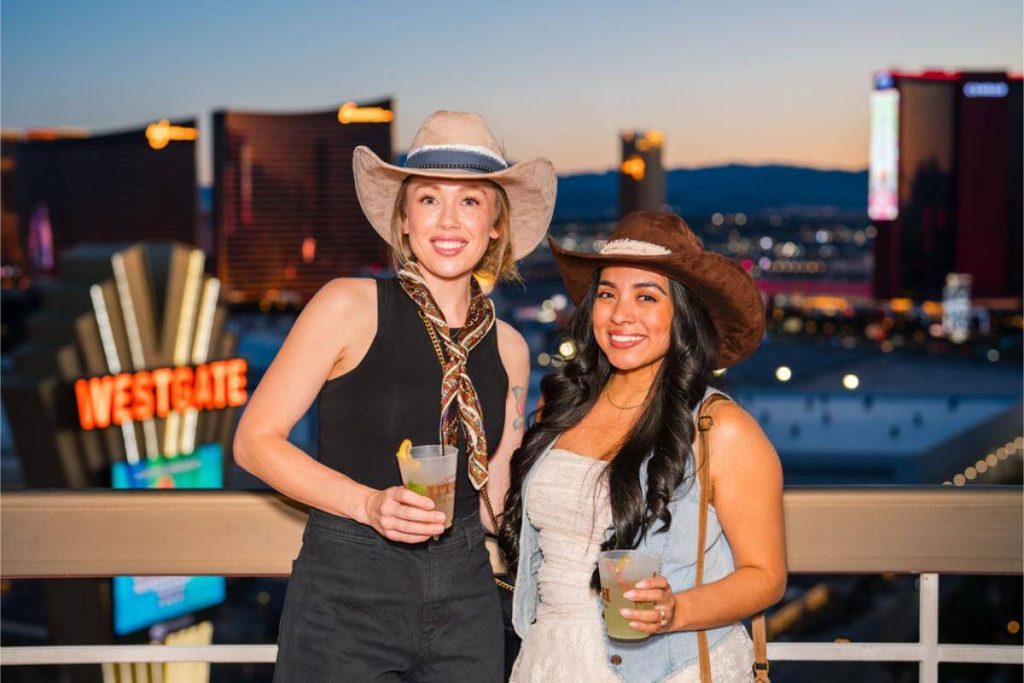
Conference swag has a brutally short audition. PPAI research describes a roughly five-second window in which an attendee decides whether an item deserves space in a tote bag, desk drawer, or trash can.
The strongest swag programs do two jobs at once: they help attendees right now, and they keep your brand present after the conference ends. That is why generic trinkets underperform while practical, portable, and brand-fit items keep showing up in offices, airports, and event photos.
What makes conference swag worth keeping?
PPAI and RainFocus point to the same answer: attendees keep swag when it is useful, durable, and visually appealing.
Usefulness is the first filter. PPAI found that 75.4% of respondents kept promotional products because they were useful, and 48.7% kept them for longer than five years. That is a strong argument for items tied to work, travel, hydration, or daily carry, not random desk clutter.
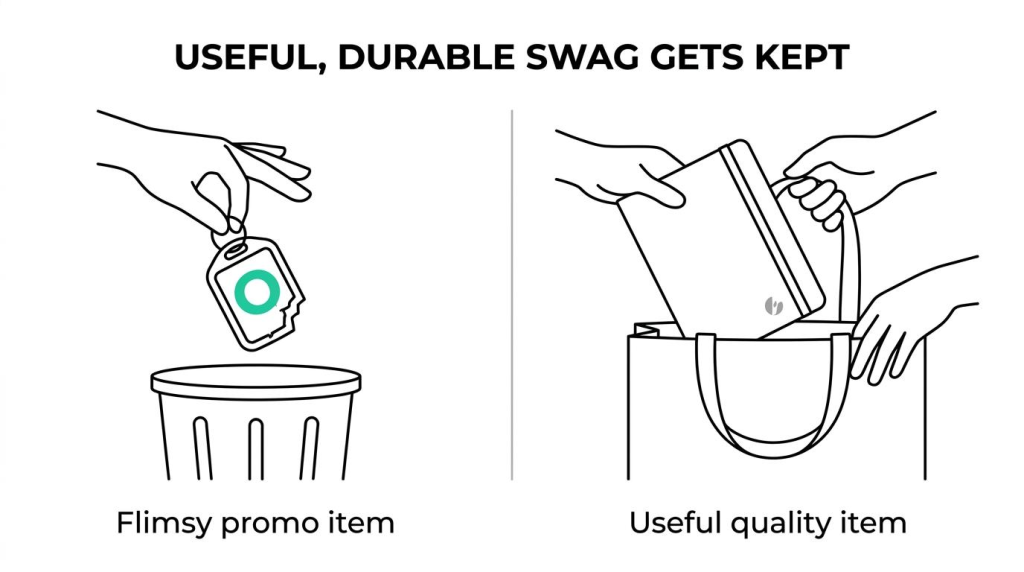
Side-by-side conference swag comparison showing high-quality useful items with subtle branding versus cheap novelty items with oversized logos.
Design is the second filter, and many marketers underrate it. PPAI also found nearly 90% said design affects whether they keep a promo item, while 44% preferred subtle branding over big, bold logos. A common mistake is assuming the logo is the product. In practice, the product has to earn its place first.
“Raising the Hat Bar turns conference swag into a staffed, mobile hat-design station where guests customize trucker, rancher, or cowboy hats on-site.”
Quality closes the deal. If an item feels flimsy, scratches easily, leaks, or looks like obvious leftover merch, it usually fails in that first five-second window. If it feels like something the attendee might have bought anyway, it has a real chance.
Why do useful conference swag ideas outperform novelty items?
Useful items win because attendees can justify carrying them, and notebooks or chargers solve immediate problems.
RainFocus found that 25% of respondents named notebooks and planners as their favorite event swag, with work-friendly tech like chargers, earbuds, and mini speakers ranking second. That result makes sense at conferences, where people take notes, charge phones, and move between sessions all day.
Novelty can still work, but only when it overlaps with function or identity. A playful item that is also wearable, photo-friendly, or travel-friendly can survive longer than a forgettable stress ball or gimmick. The myth is that “fun” and “useful” compete with each other. The better view is that fun only scales when the item still earns real use.
RainFocus also reported that 82% keep swag for at least a month, while 56% donate unwanted items or give them away. That trade-off matters. Cheap bulk swag may look efficient on a spreadsheet, but it often shifts value away from your brand the moment attendees hand it off.
What are the 9 conference swag ideas guests actually want?
The strongest conference swag ideas combine utility, portability, and brand fit. These nine categories consistently make sense for modern events.
Before choosing, decide whether your goal is immediate booth traffic, long-term desk presence, social visibility, or premium guest treatment. Then match the item to that goal.
- Custom hat bar activation: A mobile setup like Raising the Hat Bar gives guests a wearable gift they personalize on-site with bands, pins, patches, feathers, or trims. It works well when you want both an experience and a take-home item.
- Quality notebook or planner: Still one of the safest conference picks because attendees can use it during sessions, meetings, and travel.
- Fast-charging power bank: High utility, easy to justify keeping, and relevant to almost every attendee.
- Tech organizer or cable kit: A compact pouch for cords, adapters, and chargers fits conference travel well.
- Insulated reusable water bottle: Best when the bottle is leak-resistant, comfortable to carry, and not oversized.
- Premium pen: This only works if the writing quality feels noticeably better than a hotel giveaway.
- Packable tote or zip pouch: Helpful for expo materials, airport carry, or organizing conference gear.
- Weather-aware care item: In Las Vegas, lip balm makes more sense than another coaster. In rainy markets, a compact umbrella may be smarter.
- Work-friendly audio item: Earbuds or a mini speaker can perform well for executive audiences, hosted buyers, and teams traveling often.
The pattern is clear: items with an obvious use case beat decorative extras. If the attendee can answer “When would I use this?” in one second, you are on solid ground.
How should you match conference swag to attendee type?
The best approach is to map swag to attendee context, then narrow by role, budget, and travel behavior.
Step 1 is to identify the attendee’s moment of use. Sales teams and founders often value portable tech, premium writing tools, and polished wearables. Association attendees may prefer practical note-taking tools, drinkware, or bags they can use during the event itself.
Step 2 is to segment by environment, not just job title. A field marketer flying in for two nights has different needs than a local sponsor guest or a hosted buyer. Pro tip: travel friction changes everything. If someone is flying home with a carry-on, bulky or fragile swag becomes a burden, no matter how attractive it looks in the booth.
Step 3 is to match emotional value to event type. Corporate conferences often reward clean, subtle branding and work utility. Internal kickoffs can support more identity-driven items like apparel or hats. Weddings, hospitality suites, and social mixers can justify more expressive, personalized keepsakes.
Which works better at conferences: wearable swag or desk swag?
Wearable swag builds visibility faster, while desk swag often lasts longer in daily work routines.
Wearable items like hats, outerwear, or premium caps create instant crowd-level visibility. They show up in hallway conversations, selfies, after-hours events, and group photos. That makes them strong when your goal is social proof, theme reinforcement, or sponsor presence that feels less static than a flyer or banner.
“Raising the Hat Bar describes hats as visible across the crowd and strong in photos, conversation, and keepsakes.”
Desk swag has a different advantage. Notebooks, planners, pens, and chargers live near work. If your main KPI is office recall over the next three to six months, those categories are often safer. PPAI’s data on subtle branding matters here too: desk items with tasteful logo placement usually survive longer than loudly branded apparel.
Many teams assume wearable swag means T-shirts, but that is often the wrong benchmark. Sizes complicate inventory, cuts vary, and fabric quality can disappoint. Hats, by contrast, avoid most sizing issues and can bridge style, merch, and function.
How do you add branding without making swag feel like an ad?
The best branding strategy is subtle placement, useful context, and guest choice.
Step 1 is to reduce logo dominance. PPAI found 44% preferred subtle branding, which is a strong signal to move away from giant front-and-center marks. Small logo embroidery, tone-on-tone prints, interior notebook marks, zipper pulls, or cap-side branding often feel more premium.
Step 2 is to brand the layer around the item, not only the item itself. Packaging, insert cards, belly bands, QR cards, and event signage can carry more of the campaign message while the object stays attractive enough to use in public. That protects long-term keep rates.
“Raising the Hat Bar can integrate logo pins and custom patches, giving sponsors a branded option without turning the whole hat into an ad.”
Step 3 is to let guests personalize. Choice changes perception. When attendees pick a color, trim, cover material, or patch, the item starts to feel owned rather than distributed. That shift is powerful because personal preference often matters more than your logo size.
Why can an interactive swag activation outperform a grab-and-go giveaway?
Interactive swag performs better when the event goal includes memory, dwell time, and conversation.
A passive giveaway table creates distribution. An activation creates a moment. That difference matters because memory improves when attendees do something, make a choice, or talk through a customization decision. If your objective is booth traffic, sponsor visibility, or a stronger hospitality experience, interactivity can do more than a box of pre-packed freebies.
A wearable activation is especially strong because it combines participation with public visibility. A guest who builds a custom hat, adds a patch or pin, and puts it on immediately becomes part of the event atmosphere. That item is not just swag anymore. It is part of the attendee’s outfit and part of the photo record.
This does not mean every conference needs a live activation. If your venue is tight, your schedule is rushed, or your audience values speed over experience, quick-serve premium items may still be the better fit. But if you need people to stop, engage, and remember, interactive formats deserve serious consideration.
How do you budget conference swag without defaulting to cheap items?
Strong swag budgets start with keep-rate goals, not just unit cost.
Step 1 is to define what success means. Are you trying to reach 2,000 booth visitors, reward 150 VIPs, or create a memorable sponsor lounge? Those are different jobs, and they should not use the same product strategy.
Step 2 is to match spend to audience value and expected lifespan. A notebook used weekly for six months can outperform five disposable gadgets. This is the central trade-off: broader distribution lowers per-unit spend, but premium utility usually lifts actual retention.
Step 3 is to build tiers instead of one universal item. That keeps the budget disciplined without forcing every attendee into the same experience.
- High-volume expo traffic: slim, useful, portable items
- Hosted meetings: better materials, work-ready utility
- VIP events: personalized or wearable gifts
- Sponsor lounges: interactive swag activations
A common mistake is treating the cheapest SKU as the safest decision. It is usually the riskiest if most of the batch gets left in hotel rooms or donated after the event.
What conference swag mistakes cause items to be thrown away?
The biggest mistakes are low quality, poor portability, and branding that overwhelms the product.
Attendees reject swag quickly when they cannot picture using it. They also reject items that feel too promotional to wear or display. That is why subtle branding, useful form factors, and solid materials keep showing up as best practices across event merchandising research.
After that, operational details start to matter. A great idea on paper can fail because it leaks, breaks, wrinkles, or is awkward to fly home with.
- Oversized format: hard to pack, easy to abandon
- Cheap materials: weak zippers, poor ink flow, thin fabric
- Logo overload: looks like advertising, not a gift
- No use-case: unclear value after the event
- Travel friction: fragile, spill-prone, or airport-unfriendly
One more misconception deserves attention: sustainability is not only about recycled materials. An item that lasts and gets used repeatedly is often a better environmental choice than a “green” product nobody keeps.
How do you choose conference swag that works for Las Vegas and travel-heavy events?
Las Vegas conferences reward swag that handles heat, movement, and airline constraints.
PPAI has pointed to location-specific thinking for conference merchandise, including lip balm for Las Vegas and umbrellas for Washington, D.C. That is smart event planning because local climate changes what feels useful. In dry, sunny conditions, hydration and personal comfort items rise in value. In a walkable convention corridor, portability matters even more.
For travel-heavy events, the checklist is simple. Keep items light, durable, easy to pack, and easy to use right away. If attendees are flying home, avoid anything fragile, bulky, or likely to create checkpoint friction. A compact notebook, premium pen, hat, pouch, or charger often travels better than a novelty kit.
Las Vegas also rewards visually social items. People take photos, move between sessions and dinners, and often mix work with hospitality events. If you want swag that lives both on the conference floor and after-hours, wearable gifts and polished daily-carry items tend to fit the city especially well.