Interactive Event Stations: 15 Ideas That Get Guests Participating (Not Just Watching)
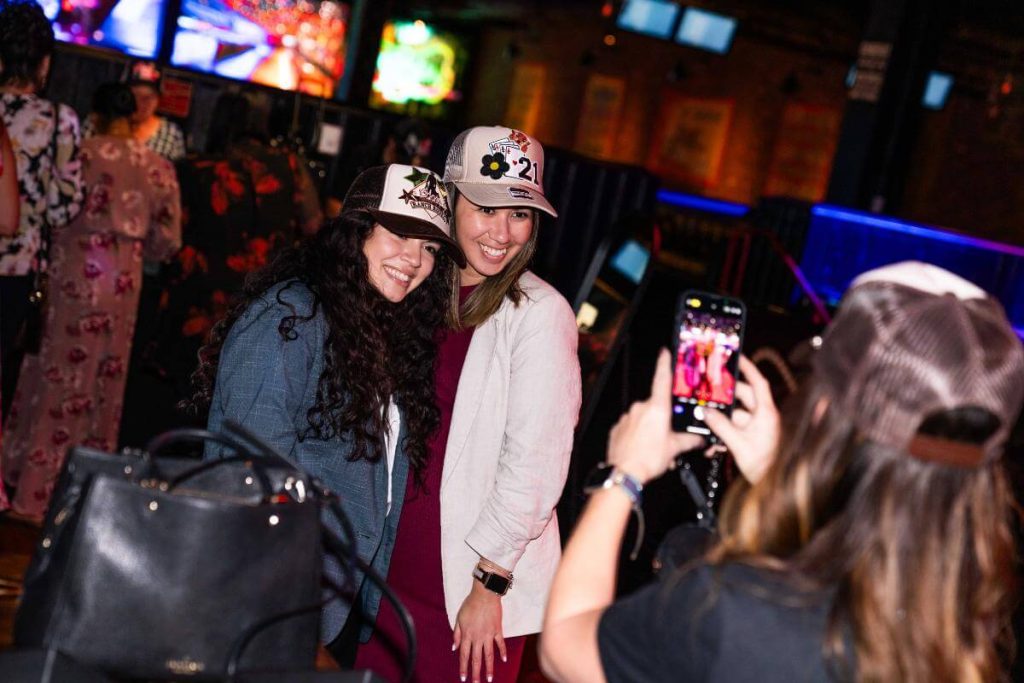
The most memorable events give guests something to do, not just something to look at.
That shift from passive attendance to active participation is more than a creative preference. It is tied to stronger event performance. EventTrack’s 2015 consumer research found that 87% of respondents said live events or live product demos were better than TV commercials for showing a product or service. The same report found that 74% told friends or family who were not there about the experience, and 97% said participating made them more inclined to purchase the promoted product or service.
That helps explain why interactive formats keep gaining ground. EventTrack 2025 reported that 74% of Fortune 1000 marketers expected to increase experiential budgets in 2025, while 56% of eventgoers planned to attend more B-to-C and B-to-B events than they did in 2024. When budgets and attendance both move up, planners need ideas that earn attention quickly and keep people engaged long enough to matter.
Why interactive event stations increase event engagement
The best event stations do not ask guests to admire a setup from a distance. They invite a choice, a small action, and a visible result. That result might be a personalized item, a photo, a sample, a score, or a short skill-based win. Once guests can shape the experience, dwell time usually rises and the activation starts to feel personal.
That personal element matters because participation creates memory. A guest who watches a branded display may remember the logo. A guest who makes, wears, tastes, tests, or shares something tied to the brand is much more likely to remember the full interaction.
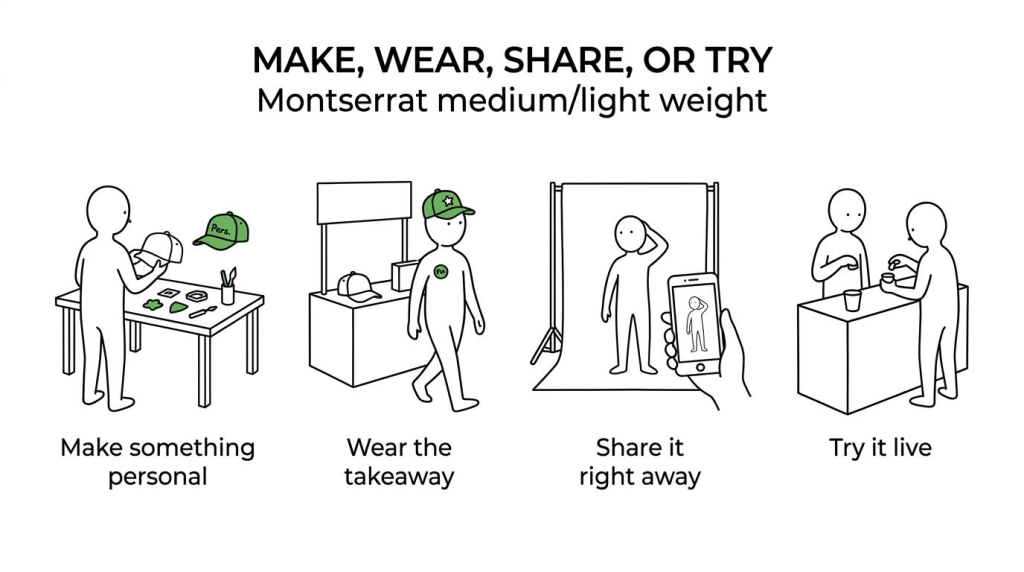
Graphic showing four interactive event station formats: Make, Wear, Share, and Try, with example activities for each.
In practice, the strongest station concepts tend to fall into four categories:
- Make: guests build or customize something with their hands
- Wear: guests leave with a visible item that keeps the event in circulation
- Share: guests generate social content or word-of-mouth on the spot
- Try: guests experience the product in a live, practical way
A strong station often combines at least two of those at once.
15 interactive event station ideas for live events
Not every event needs a giant build-out. Many of the most effective ideas are simple, fast, and easy for guests to understand within seconds.
| Interactive station idea | Best fit | Why guests participate |
|---|---|---|
| Custom hat bar | Corporate events, weddings, festivals, private parties | Guests create and wear a one-of-a-kind piece immediately |
| Patch and pin bar | Brand activations, trade shows, school events | Quick personalization with visible brand tie-in |
| Photo booth with instant sharing | Conferences, launches, galas | Fast social content and easy group participation |
| Green screen or AI portrait studio | Tech events, brand campaigns, themed parties | Adds novelty and a strong share factor |
| DIY charm or bracelet bar | Showers, mitzvahs, VIP lounges | Personal, giftable, and easy to style |
| Trucker cap decorating station | Sports events, youth events, pop-ups | Fast throughput with broad appeal |
| Live product demo lab | B-to-B events, retail activations | Shows product value through action, not claims |
| Tasting flight station | Food, beverage, hospitality events | Sampling turns curiosity into a decision |
| Mocktail mixing bar | Wellness events, receptions, corporate socials | Interactive and inclusive, with room for brand flavors |
| Scent blending bar | Beauty, lifestyle, luxury events | Highly personal and memorable sensory experience |
| Build-your-own bouquet wrap station | Weddings, spring events, client appreciation | Creative, photogenic, and take-home friendly |
| Collaborative mural wall | Community events, team building, festivals | Many guests can join without long wait times |
| Trivia and prediction station | Conferences, sports events, trade shows | Encourages repeat participation and leaderboard energy |
| Spin-to-win skill game | Expos, retail events, public activations | Quick action with a prize-driven hook |
| Live illustration station | Weddings, launches, VIP events | Guests become part of the artwork and keep the result |
A good mix matters. If every station takes 10 minutes, lines get long and participation stalls. Pair one deeper experience with a few fast-touch stations and the event feels active without feeling crowded.
Make, wear, share, and try: the station formats that work hardest
“Make” stations are some of the strongest performers because they turn guests into creators. A hat bar, charm station, patch bar, or bouquet bar works well because the guest leaves with something that reflects personal taste. That ownership creates instant emotional value.
A custom hat bar stands out in this category because it combines craftsmanship, fashion, and social visibility. Guests choose a base style, select embellishments, and leave wearing the finished piece. According to Raising the Hat Bar, a straightforward trucker hat build often takes about 4 to 6 minutes per guest, while a felt rancher design often lands around 8 to 12 minutes. That range is useful for planners because it helps match the station to event traffic and staffing needs.
“Wear” stations keep working after the event ends. A hat, cap, pin, patch, or bracelet moves through the venue and becomes a conversation starter. At branded events, that means the activation extends beyond the station footprint. People see other guests wearing or carrying the finished item and want their own turn.
“Share” stations turn participation into distribution. A well-run photo booth or digital portrait station can create a measurable social ripple. In one MarketingSherpa case study, New Relic’s photo-booth activation achieved a 14% attendee participation rate, generated more than 200 retweets during the event, and produced 164 virtual billboards on-site. That is a useful reminder that a station does not need to entertain everyone to create strong reach.
“Try” stations are especially effective when the event goal is product education or purchase intent. A tasting lab, demo counter, mini test track, or scent bar gives guests direct experience with the offer. Instead of hearing what a product does, they feel it.
How to choose interactive event stations based on event goals
The right station depends on what success looks like for the event. A wedding, a conference booth, and a community festival may all want high participation, but the path to that result is different.
Start with the main event objective, then choose the station format that supports it most clearly.
- Brand awareness: choose visible takeaways, photo moments, and items guests carry or wear
- Lead generation: add QR codes, scans, or gated upgrades tied to registration
- Sales support: use demos, tastings, and product trials that answer questions fast
- Team connection: pick collaborative or creative stations that spark conversation
- Guest experience: focus on keepsakes, customization, and a strong wow factor
Then look at audience behavior. If guests are moving quickly through a conference floor, a faster station usually wins. If they are settling into a reception or private party, a more layered build can work beautifully.
Age range matters too. Mixed-age crowds often respond best to stations that are intuitive at a glance. Customization, photos, tasting, and simple games tend to perform well because they do not need much explanation.
Event station logistics that improve participation rate and dwell time
A strong idea can still underperform if the setup slows people down. Participation rate is heavily affected by visibility, wait time, staffing, and how easy the first step feels.
People rarely want to read instructions at an event. They want to glance, get it, and join.
That means the station should show the process clearly. Display finished examples. Break the activity into obvious steps. Let staff greet guests with a short invitation instead of waiting for someone to ask what is happening.
The practical details that move the needle are often simple:
- Clear entry point
- Visible pricing or “included” signage
- Staff prompts that invite action
- Limited but appealing choices
- Finished samples at eye level
- Good lighting for photos
- Packaging for take-home items
Throughput planning is just as important. If a station is hands-on and customized, planners need to estimate how many guests can realistically participate in the available event window. That is where timing benchmarks become useful. A station that takes 4 minutes per guest behaves very differently from one that takes 12.
Matching station speed to event flow
One of the easiest planning mistakes is choosing an activation that is excellent in theory but mismatched to traffic.
A fast-moving public event usually needs short cycles, easy opt-in, and minimal decision fatigue. Private parties and VIP events can support more detail and longer personalization time because guests are not trying to cover as much ground.
This simple framework helps:
- Fast traffic events: 2 to 5 minutes per guest, easy rules, simple customization
- Moderate flow events: 5 to 8 minutes per guest, guided choices, visible queue management
- High-touch events: 8 to 12 minutes per guest, premium materials, stronger keepsake value
When the station is part of a branded activation, there is another layer to think about. Brand presence should feel built into the experience, not pasted on after the fact. Logos on patches, color-matched materials, branded pins, custom tags, and photo backdrops usually feel more natural than an oversized sign trying to do all the work.
Interactive event station ideas for corporate events, weddings, and private parties
Corporate events often benefit from stations that blend fun with visible brand connection. Custom hats, patch bars, live demos, tasting flights, and share-ready photo setups all fit well because they offer both guest value and measurable engagement. They also give teams something to talk about after the event, which supports word-of-mouth.
Weddings and social celebrations often lean toward keepsakes and personalization. Hat bars, charm stations, bouquet wraps, live illustration, and mocktail bars work well because guests get an experience and a takeaway. The station becomes part entertainment, part favor.
Festivals and community events usually need durability and speed. Trucker cap decorating, collaborative murals, trivia stations, spin-to-win games, and quick photo formats tend to handle volume better while still feeling interactive.
For planners in Las Vegas, mobility can make a major difference. Venues range from hotel ballrooms and rooftop lounges to trade show floors and private estates, so stations that can scale up or down are often the most useful. A mobile setup with guided staffing, quality materials, and a clear guest flow can turn a standard event corner into the area people remember first.
That is the real advantage of interactive event stations. They turn attendance into participation, and participation is what people talk about, photograph, wear, and take home.