Live Customization Options Compared: Hat Bar vs Screen Printing vs Engraving at Events
Live personalization changes the energy of an event. A giveaway table becomes a gathering point. Guests slow down, make choices, ask questions, compare designs, and leave with something that feels tied to a real moment rather than a simple handout.
That is why event planners keep circling back to the same question: which live customization format creates the right mix of speed, style, brand impact, and guest excitement? Hat bars, screen printing, and engraving all answer that question in very different ways.
Three formats, three very different experiences
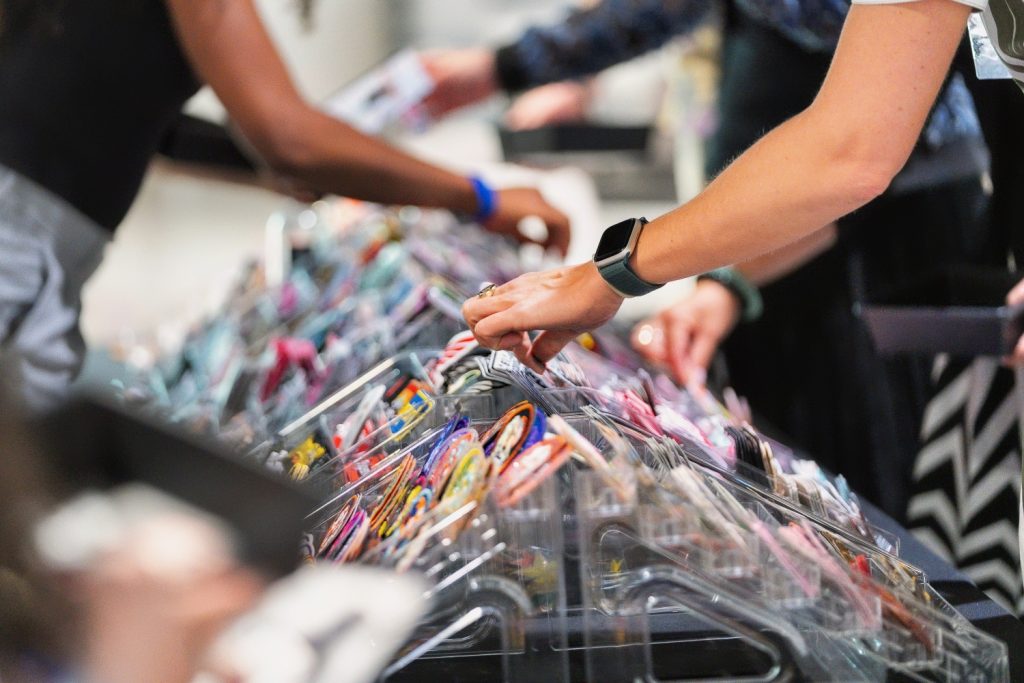
A hat bar is the most style-driven of the three. Guests choose a hat shape, and color, then personalize it with patches, or bands, pins, charms, playing cards, feathers, or other accents. The appeal is not just the finished item. It is the act of building a look. Guests become part stylist, part creator, and part audience for everyone else’s design.
Screen printing feels more like live merch production. Guests usually select from a small set of prebuilt graphics, then watch that artwork get printed onto a shirt, tote, or cap. It is visual, fast, and excellent for bold branding. The process is exciting to watch, but the creative role for the guest is usually narrower.
Engraving sits in a different lane. It is quieter, more refined, and often tied to hard goods like tumblers, glassware, wood items, pens, or leather accessories. Guests tend to choose a name, initials, date, or short graphic. The result has permanence and polish, which makes it especially strong for VIP gifting and high-touch hospitality.
After seeing these stations side by side, the differences become clear fast:
- Hat bar: style-first, highly social, wearable statement piece
- Screen printing: logo-forward, crowd-friendly, strong for apparel
- Engraving: polished, precise, ideal for premium keepsakes
Speed matters more than most planners expect
Live activations rise or fall on line flow. A beautiful idea can lose momentum if guests wait too long or if the process feels hard to follow.
Hat bars usually perform well here because the actual attachment step is quick. A patch press can take under a minute, and with trained stylists guiding choices, throughput can reach dozens of hats per hour. The main variable is decision time. Guests love choice, but too many choices can slow the line.
Screen printing is also strong for volume, especially with preselected artwork. One item can often be printed in one to three minutes, and a single press can move through roughly 50 to 75 pieces per hour. Add another press, and capacity grows quickly. That makes it attractive for conventions, large employee events, and public-facing brand activations.
Engraving is slower by nature. A short name or monogram may still take five to ten minutes once setup, positioning, and machine time are included. That pace can work beautifully for boutique events or curated guest lists, but it needs careful planning for larger crowds.
| Method | Typical pace | Best crowd size | Guest involvement | Common items |
|---|---|---|---|---|
| Hat bar | Fast styling and quick application | Small to large, with enough staff | High | Trucker, rancher, and cowboy |
| Screen printing | 1 to 3 minutes per item | Medium to very large | Moderate | T-shirts, totes, sweatshirts, some caps |
| Engraving | 5 to 10 minutes per item | Small to medium | Moderate | Tumblers, glassware, wood, leather, metal goods |
If the event expects heavy foot traffic and short dwell times, screen printing has a clear operational advantage. If the goal is a richer guest moment with strong social interaction, hat bars often create a better balance between speed and participation.
The creative ceiling is different for each one
This is where hat bars stand apart. Screen printing and engraving both depend on artwork that is largely prepared ahead of time. Guests can choose between options, personalize a line of text, or add initials, but the design system is mostly set before the event starts.
A hat bar feels looser and more expressive. The base hat changes the mood right away. A foam trucker cap sends one message. A rancher with a fabric band sends another. Add a branded patch, a metallic pin, and a textured trim, and the piece starts to look less like merch and more like personal style.
That makes hat bars especially strong when the event wants self-expression to be visible. Weddings, western-themed celebrations, influencer gatherings, hospitality events, and brand launches often benefit from that fashion element. Guests do not just take the item home. They put it on immediately.
Screen printing offers a different kind of design control. It is excellent when brand standards matter, when the logo needs to appear exactly as approved, or when the campaign artwork is the hero. Crisp lines, strong color, and repeatability are its strengths. What it loses in tactile variety, it gains in consistency.
Engraving wins on precision. Fine linework, initials, dates, monograms, and subtle logos all look sharp. It is less vivid than the other two methods, but the restraint is part of the appeal.
A useful way to frame the trade-off is this:
- More fashion personality: hat bar
- More graphic consistency: screen printing
- More fine-detail permanence: engraving
Durability, perceived value, and what guests keep using
Not all live-customized items age the same way.
Engraving is the most permanent finish of the group. Once a name or mark is etched into stainless steel, wood, glass, or leather, it becomes part of the object. There is no print to crack and no patch edge to lift. That permanence gives engraved items a strong gift quality.
Screen printing is very durable too, especially with quality inks and good blanks. A well-printed tee or tote can stay in rotation for a long time. That matters for brands that want repeated exposure after the event. A shirt worn once at the venue is nice. A shirt worn for months is far better.
Hat bars live in a slightly different category because the value is tied to both use and memory. A personalized hat can become a go-to accessory for years, especially when the styling feels current and the base hat has real quality. The only caveat is that some embellishment methods hold up better than others. Stitched details and well-applied patches tend to last longest, while decorative elements on heavily handled or washed hats may need more care.
Perceived value is just as important as physical durability. Guests often read these three formats in distinct ways:
- Hat bar: creative, fashionable, personal
- Screen printing: useful, brand-friendly, familiar
- Engraving: refined, giftable, lasting
Space, staffing, and event logistics
The physical footprint of the station shapes the planning almost as much as the creative format.
Hat bars usually need tables, display space, inventory storage, and a work area for finishing. They are not mechanically heavy, which helps with setup, but they do need room for browsing. A crowded table full of trims and patches can look exciting or chaotic depending on the layout and staff flow. Outdoors, wind is the main enemy. As Ballonmand notes in its planning primer on indoor versus outdoor entertainment, wind, noise, and sightlines quickly become operational variables that shape staffing and backup plans.
Screen printing needs more infrastructure. Presses, flash dryers, inks, and work surfaces all take space. Power access matters. So does ventilation and surface protection. The payoff is production capacity, but the setup is more technical and less forgiving.
Engraving stations are compact by comparison. A small worktable and machine can fit comfortably in tight spaces, which is valuable for retail pop-ups, hotel lounges, or VIP corners. The machine still needs careful supervision, and planners should think about safety, fumes, and queue placement, but the footprint is light.
This tends to be the practical breakdown:
- Best for compact spaces: engraving
- Best for high-volume branded output: screen printing
- Best for social interaction per square foot: hat bar
Which one fits which event?
The best choice depends on what the event is trying to make people feel.
If the goal is broad reach, clear branding, and fast throughput, screen printing is a strong pick. It works well for expos, staff appreciation days, athletic events, and large public activations where speed and logo visibility matter most.
If the goal is premium gifting, engraving has real strength. It suits beauty launches, hospitality suites, executive events, and smaller receptions where the item itself should feel polished and collectible.
Hat bars shine when the event needs energy, personality, and a strong social component. Guests talk to each other while they design. They hold hats up for opinions. They take photos, and wear them right away. That creates a visible ripple through the room.
A quick planning filter helps:
- Choose a hat bar when: the event values self-expression, fashion, and guest participation
- Choose screen printing when: the event needs scale, speed, and consistent campaign graphics
- Choose engraving when: the event calls for quiet luxury and highly durable personalization
Why hat bars often create the strongest memory
All live customization stations give people something to take home. Hat bars give them a story to wear.
That difference matters. A guest at a hat bar is making dozens of small creative decisions, each one building attachment to the finished piece. Which hat shape feels right? Which patch says the most? Which band changes the whole mood? That layered choice creates ownership in a way preselected graphics often cannot.
There is also a social advantage. Screen printing draws a line. Engraving draws a crowd around craftsmanship. A hat bar often creates a mini community inside the event. Guests compare looks, trade ideas, and celebrate the finished result in real time. For hosts who want an activation to feel lively rather than transactional, that social behavior is hard to beat.
For planners in Las Vegas, where events compete for attention and guests expect something worth posting, that mix of fashion, participation, and instant wearability is a powerful edge. The item leaves the station on the guest’s head, not in a bag. That simple detail changes everything.