9 Conference Booth Ideas Guests Engage With All Day
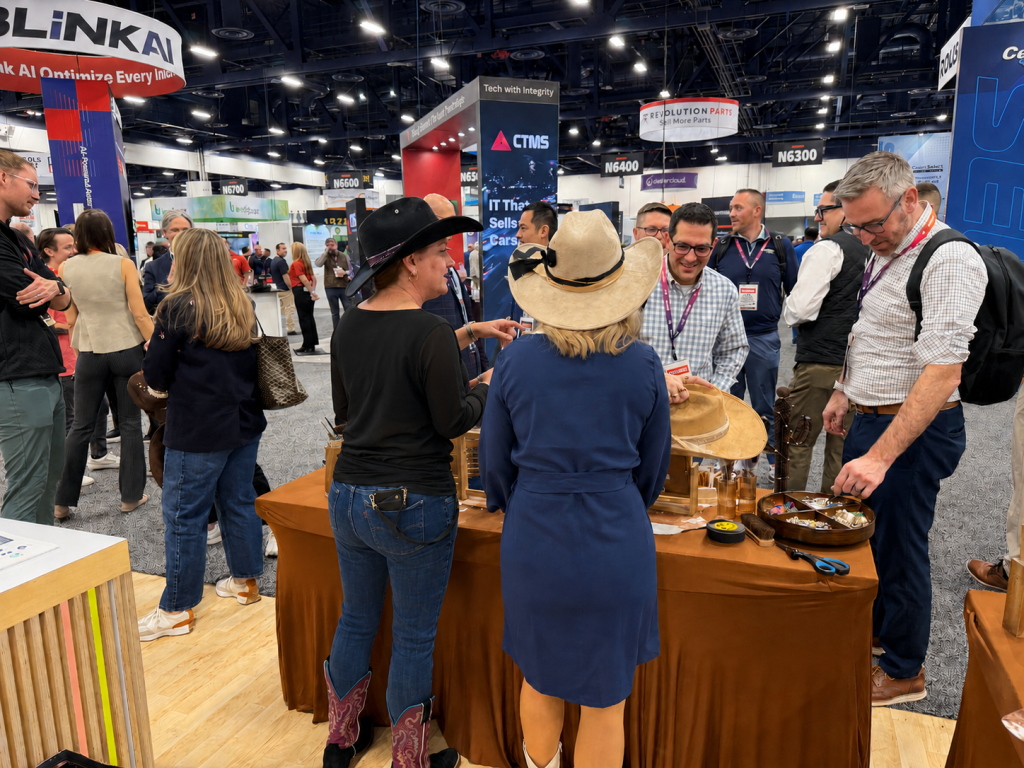
Conference booth ideas work best when they feel less like a sales counter and more like a live experience. In Las Vegas, a mobile activation company like Raising the Hat Bar is relevant here because it shows how guided customization can turn foot traffic into conversation, participation, and a take-home item people actually keep.
TL;DR: Summary
- The best conference booth ideas for all-day engagement are hands-on, easy to join, and tied to a useful takeaway that extends brand recall after the event.
- PPAI reported that 75.4% of people keep promotional products because they are useful, and 48.7% keep them for more than five years.
- CEIR reporting covered by Trade Show Executive shows strong attendee use for exhibition-floor learning, especially education theatre formats and short sessions on hot trends or new products.
- Interactive concepts, including customization models like Raising the Hat Bar, perform best when the activity is visible from the aisle, finishes quickly, and supports a clear event goal.
That pattern matters because booth success is rarely about decoration alone. It comes from dwell time, questioning, memory, and whether guests leave with something practical enough to use after the conference.
Why do interactive conference booth ideas get more engagement?
Interactive conference booth ideas get more engagement because they turn visitors into participants. CEIR organizer data and University of Rochester exhibit research both connect hands-on formats and smart interactive placement with longer dwell time, more questioning, and stronger use of the exhibit environment.
People stop when they can see something happening. They stay when the action is clear, the entry point feels easy, and the outcome is worth a few minutes of attention. That is why live demos, guided personalization, short workshops, and quick problem-solving stations outperform static banners in busy aisles.
The practical lesson is simple: when guests can make, test, or personalize something, they have a reason to stop, ask questions, and stay long enough for a real conversation.
Raising the Hat Bar turns booth traffic into a guided, on-site customization experience instead of a table of generic swag.
A common mistake is hiding the interactive element behind a table or using signage that explains too much before the guest does anything. The University of Rochester’s exhibit work found that the location of interactives and signage affected engagement. In booth terms, the first action should be obvious from the aisle.
What makes people stay longer at a conference booth?
Guests stay longer when a booth offers visible action, a simple first step, and a useful result. Dwell time rises when people can understand the activity in a few seconds and see other attendees enjoying it.
Booth traffic usually breaks down into three moments: stop, sample, and stay. A strong booth gives each moment a purpose. The stop comes from motion or curiosity. The sample comes from a low-friction action like touching, voting, testing, or choosing. The stay comes from relevance, whether that means learning something, solving a problem, or creating something worth keeping.
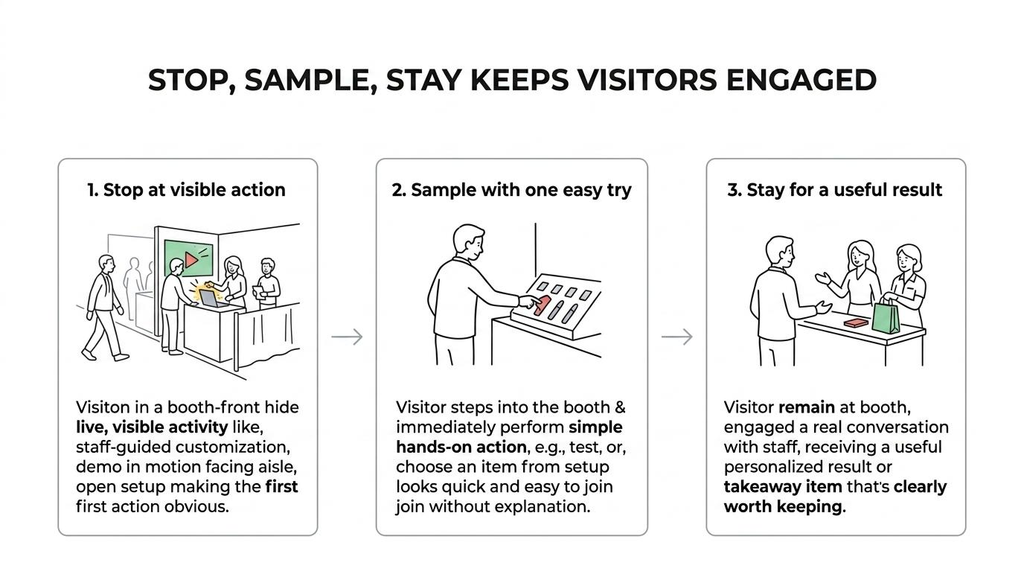
Three-step diagram showing conference booth engagement moving from stop to sample to stay, with visible activity, easy participation, and a useful takeaway.
One misconception is that longer dwell time always means better performance. It does not. If your line becomes too slow, then you may lose total reach. The better target is productive dwell time: long enough for meaningful interaction, short enough to keep the booth accessible.
What are the 9 conference booth ideas guests engage with all day?
The strongest conference booth ideas combine movement, customization, and a take-home result. Raising the Hat Bar fits that model because on-site personalization gives attendees an activity they can see, join, and remember.
These ideas work across trade shows, association meetings, internal conferences, recruiting fairs, and sponsor activations when they are matched to the audience and event pace.
- Custom hat design station: Guests choose a hat style and personalize it with patches, pins, embellishments, or branded elements, creating a wearable takeaway.
- Build-your-own sample kit: Attendees assemble a kit based on job role, product interest, or use case, which makes the takeaway more relevant.
- Live micro-workshop booth: Staff teach one practical task in five to ten minutes and send attendees away with a cheat sheet.
- Product challenge demo: Visitors test a product claim themselves, which creates instant proof and more informed questions.
- Ask-an-expert clinic: Guests bring a problem and receive a short diagnosis, recommendation, or benchmark.
- Mini education theatre: A side-stage hosts short talks on hot trends, product updates, or common mistakes.
- Photo plus customization corner: Attendees personalize a prop or keepsake, then share the result socially.
- Interactive survey wall: Visitors vote on industry questions and receive a tailored recommendation based on their answer.
- Mission or community board: Guests contribute ideas, pledges, or stories that connect brand purpose to participation.
The best option depends on what you need most. If lead quality matters most, then clinics and demos usually win. If broad awareness is the goal, then visible customization and photo-led concepts often pull more passersby.
How do you choose the right booth idea for your event goals?
The right booth idea starts with one priority, not five. Qualified leads, product education, recruiting, and brand awareness each call for a different booth mechanic.
Teams often choose a concept because it looks exciting in a rendering. That is backwards. Start with the business outcome, then design the visitor experience around it.
- Start with the goal: brand awareness, lead generation, product education, recruiting, or customer loyalty.
- Match the interaction to traffic volume: high-throughput booths need fast entry; lower-volume booths can support deeper conversations.
- Define the take-home and follow-up trigger: a sample, personalized item, benchmark, or booked meeting should connect to the next step.
If your booth must serve many walk-ups in a short window, then pick an interaction that starts without staff explanation. If your product needs context, then build a short teaching moment into the activity. Pro tip: choose one primary metric before the show, or the booth will drift into a collection of disconnected tactics.
Are hands-on booths better than passive displays?
Hands-on booths are usually better for engagement, while passive displays can be better for message control and scale. The smarter choice depends on whether you need curiosity, education, or efficient filtering.
A passive display can still work when the audience is highly targeted and already knows the category. In that case, clear signage, a sharp message, and a scheduled demo may be enough. Yet passive booths often struggle in crowded halls because they ask attendees to care before they have done anything.
Hands-on concepts create a different psychology. The attendee commits through action first, then opens up to conversation. That sequence matters because people often ask better questions once they have touched the product, tried the activity, or seen a result.
The trade-off is operational. Interactive booths need staffing, reset time, supplies, and queue management. If those pieces are weak, then the concept feels slow instead of compelling.
How should you design the booth layout for dwell time?
Booth layout should put the first action at the aisle, not the back wall. Raising the Hat Bar is a useful model because visible customization gives attendees an immediate reason to step in before any sales pitch begins.
Think of the booth as four zones: attract, act, talk, and exit. The attract zone faces the aisle and shows the activity. The act zone is where the visitor starts. The talk zone supports the real conversation. The exit zone delivers the takeaway and the next step. When these zones blur together, guests hesitate.
Research from the University of Rochester on interactive exhibits is helpful here because it found that the placement of interactives and signage affected engagement and questioning.
Raising the Hat Bar brings a mobile, staffed customization station to events, which keeps setup, guest guidance, and take-home delivery in one workflow.
A frequent layout mistake is placing storage, swag, or staff conversations at the front edge of the booth. That blocks the most valuable real estate. Another mistake is writing a long headline that explains the whole brand before the visitor sees the first action. Show first, explain second.
Should you offer premium giveaways or interactive keepsakes?
Interactive keepsakes usually outperform expensive generic swag when usefulness and memory matter. PPAI’s survey points in that direction because usefulness was the top reason people kept promotional products.
That result matters more than many teams realize. A costly item is not automatically memorable. If it has weak relevance to the booth experience, then it may not create strong brand recall. PPAI also found that people kept promo products because they reminded them of an event or experience, were fun to have, or had appealing design.
So the real comparison is not cheap versus premium. It is generic versus meaningful. A useful branded object connected to a live experience often works harder than an expensive item handed out with no context.
A common misconception is that every attendee wants the highest-value item possible. Many actually want something practical, attractive, and easy to use. That is where interactive keepsakes stand out, because the guest has already invested attention in creating or selecting the item.
How can you add learning without slowing booth traffic?
You can add learning without slowing traffic by keeping sessions short, visible, and tightly focused. CEIR reporting covered by Trade Show Executive suggests that exhibition-floor learning formats attract high attendee use when they are accessible and timely.
The lesson is not to turn the booth into a classroom. It is to create a mini education theatre that supports traffic rather than trapping it.
- Keep sessions brief: Aim for one topic per talk and a short runtime, often well under 30 minutes.
- Use hot topics: New products, current challenges, and trend updates pull stronger attention than broad overviews.
- Place learning beside the main flow: A side zone or edge-stage works better than blocking the center of the booth.
- Give one practical artifact: A checklist, template, benchmark card, or customized takeaway makes the lesson stick.
If your team notices that talks create a crowd but not conversations, then add a clear handoff from speaker to booth staff. The session should end with a reason to continue the discussion one-on-one.
What metrics show a conference booth idea actually worked?
A booth idea worked when it improved both engagement and business outcomes. Dwell time, interaction completion, qualified conversations, and follow-up actions tell a better story than badge scans alone.
This is where many booth teams undersell themselves. A large scan count can hide weak intent. A smaller number of completed interactions tied to real conversations may be far more valuable.
- Measure stop rate: how many passersby visibly pause or enter the booth area.
- Track dwell time: how long guests stay from first contact to exit.
- Record completion rate: how many attendees finish the activity, demo, or customization.
- Count qualified conversations: how many interactions reach a defined lead standard.
- Review post-show signals: meeting bookings, email replies, social sharing, and recall in follow-up surveys.
If your booth includes a take-home item, then ask a simple follow-up question after the show: did attendees use it, wear it, share it, or mention it in conversation? That closes the loop between activity, usefulness, and brand recall, which is the real standard for conference booth ideas that keep working after the event ends.