7 Grand Opening Ideas That Drive Foot Traffic
A grand opening drives foot traffic when it gives people a reason to show up now, not later. The strongest launch events pair urgency with an in-person experience and a tangible takeaway that people remember after the day ends.
TL;DR: Summary
- The best grand opening event ideas combine a live, in-store experience, a limited-time reason to visit, and a useful takeaway people want to keep.
- Physical retail still matters: Adyen’s 2025 Retail Report says 38% of shoppers prefer physical stores, compared with 23% who prefer buying online.
- A soft opening held 1 to 2 weeks before launch can help test staffing, checkout flow, discounts, freebies, and feedback before the public event.
- Interactive activations usually outperform generic entertainment because they increase dwell time, social sharing, and brand recall in one move.
- Promotional products work best when they are useful, personal, well-designed, and subtly branded; PPAI says 61% remember the brand and 76% look it up afterward.
- Track grand opening results like a marketing campaign: foot traffic, sell-through rates, email or SMS captures, social buzz, and customer acquisition cost.
Research backs that up. Shopify recommends treating a grand opening as a measurable marketing event, while Adyen reports that shoppers still favor physical stores when they want to see, feel, or try products. If the launch feels special in person and easy to share online, it has a much better chance of turning attention into visits and visits into sales.
What makes a grand opening actually drive foot traffic?
Physical stores and timed experiences win when they create urgency people can feel. Adyen’s 2025 Retail Report and Shopify’s launch guidance point to the same formula: give shoppers a reason to visit in person, buy now, and tell someone else.
A strong grand opening answers three questions fast: Why come today? Why enter this store? Why post about it? A ribbon cutting alone rarely answers those questions. A limited product drop, a live customization moment, or a VIP preview hour usually does.
A highlighted quote asking why people should come today, enter this store, and post about it.
Shoppers also move across channels before they visit. Adyen says 40% expect to shop across multiple touchpoints, and 32% use social media to shop. That means the event itself should connect social posts, RSVPs, text reminders, and the in-store experience instead of treating them as separate campaigns.
That is why balloons and background music often underperform a hands-on activation, a timed perk, or a preview-only release.
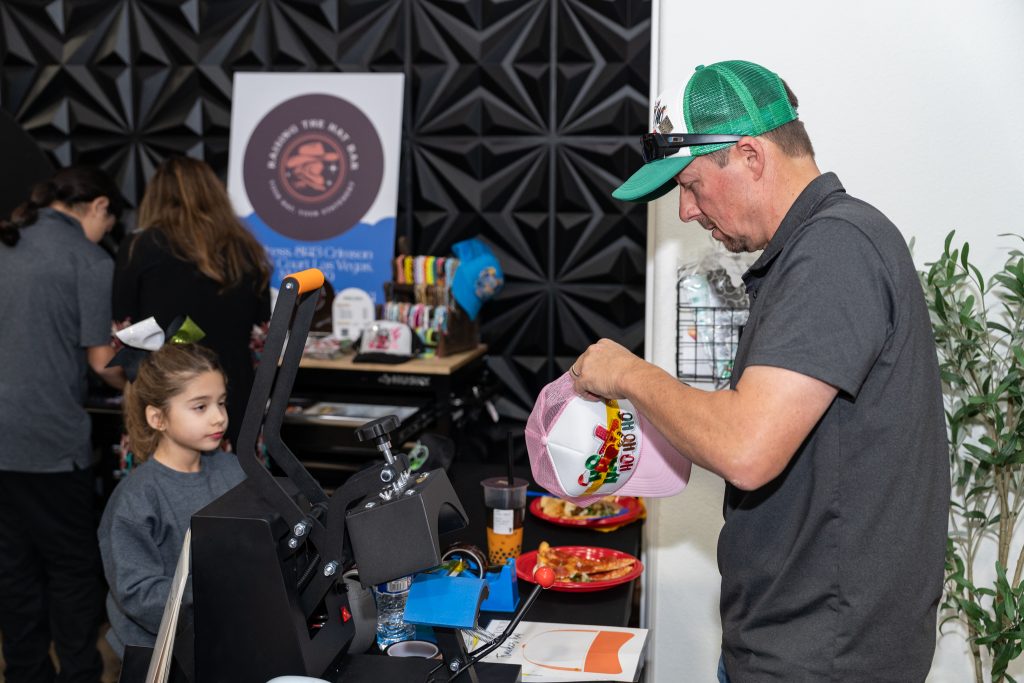
“Raising the Hat Bar turns a grand opening into a guided, on-site customization station where guests create and keep a personalized hat.”
Should you run a soft opening before the public launch?
Yes, a soft opening is often the smartest way to protect your grand opening. Shopify recommends using a soft opening 1 to 2 weeks ahead to test operations while keeping excitement high.
A soft opening is best when the team is new, the store layout is untested, or the offer is complex. It lets you stress-test checkout speed, staffing levels, discount logic, freebies, and guest flow before full public traffic arrives. If something breaks during a soft opening, it becomes a fix. If it breaks on grand opening day, it becomes the story.
The main trade-off is cost. Shopify notes that a multi-day soft opening can cost more upfront because it adds staff hours, samples, and entertainment, yet it may deliver better ROI because it improves the public launch. If your product has a high average order value or your service model depends on smooth interaction, that extra test window is usually worth it.
A common mistake is treating a soft opening as a weak version of the real launch. It works better as a live rehearsal with real measurement, real feedback, and clear changes before day one.
What are the best grand opening event ideas for driving foot traffic?
The best grand opening ideas create participation, not just attendance. Shopify, PPAI, and Adyen all point toward the same principle: people show up for novelty, utility, and social proof.
Start with one anchor experience, then build the promotion around it. Seven ideas consistently work across retail, hospitality, wellness, and service businesses:
- Mobile custom hat bar: A service like Raising the Hat Bar gives guests a live design station and a take-home item, which works well for launches that want style , interaction, and a branded keepsake in one activation.
- VIP preview hour: Invite email subscribers, neighbors, and local partners before the public crowd. This creates exclusivity and gives staff a calmer first wave.
- Limited-release product drop: Offer one launch-day-only item, bundle, or colorway. Scarcity gives people a clear reason to visit immediately.
- Maker demo or personalization station: Let guests engrave, patch, stamp, taste, test, or build something. Participation increases dwell time.
- Local partner pop-ins: Add a coffee cart, mini tasting, florist, or photo booth from nearby businesses. Shared audiences can expand reach fast.
- Passport or scavenger challenge: Give guests a simple task that moves them through the space, from fitting room to checkout to branded photo area.
- Photo moment with instant reward: Offer a small perk for posting from the event, tagging the brand, or joining the text list on-site.
The best fit depends on margin, audience, and space. If you need immediate sell-through, a timed release or bundle may beat a broad giveaway. If you need buzz and longer dwell time, customization and partner activations usually create stronger memory.
“Raising the Hat Bar supports on-site setup, staffing, design guidance, and branded elements like logos, pins, and patches for launch events.”
How should you plan a grand opening timeline step by step?
A good grand opening timeline starts weeks ahead, not the day before. Shopify recommends building pre-launch momentum early because the buildup often drives the turnout.
Step 1 is to choose the anchor. About four to six weeks out, decide what will make people visit in person: a customization station, preview access, a launch-day drop, or a partner activation. Pick one main hook, then write every promotion around that single reason to come.
Step 2 is to build audience lists and channels. Two to four weeks out, create your RSVP page, email series, social countdown, local outreach list, and text opt-in plan. If you are inviting creators or neighborhood businesses, confirm them early so they can promote with enough notice.
A timeline showing grand opening planning stages from choosing the anchor offer to building promotion, testing with a soft opening, and final launch preparation.
Step 3 is to test the operation. One to two weeks out, run the soft opening or invite-only preview. Watch line length, staffing, signage, product placement, and checkout timing. If guests keep asking the same question, the problem is usually the setup, not the guest.
Step 4 is launch execution. In the final 72 hours, confirm staffing, inventory, queue flow, content capture, and backup supplies. A beautiful idea still fails if guests wait too long, cannot find the offer, or leave without entering your CRM.
How should you choose between discounts, giveaways, and interactive experiences?
Interactive experiences usually drive the best mix of traffic, recall, and social content. Discounts, giveaways, and experiences all work, but they solve different problems.
If your goal is only same-day conversion, discounts can be effective. If your goal is brand memory, a good giveaway often lasts longer. If your goal is foot traffic plus dwell time plus shareable content, interactive experiences tend to do the most at once.
- Discounts: Best for quick conversion and price-sensitive categories. The risk is training people to wait for future deals.
- Giveaways: Best for recall when the item is useful and well-designed. PPAI says 54% still have the last promo product they received.
- Interactive experiences: Best for premium positioning, longer visits, and user-generated content. They usually cost more to produce but create stronger reasons to attend.
PPAI’s research adds an important nuance: design matters. Nearly 90% say design affects whether they keep a promo item, and 44% prefer subtle branding over oversized logos. That means a cheap freebie with loud branding can cost less today and still perform worse tomorrow.
How do you turn social buzz into actual in-store visits step by step?
Social media works best when it removes friction and points to one physical action. Adyen reports that 32% of consumers use social media to shop, so launch posts should guide people toward a visit, not just collect likes.
Step 1 is to post an offer with a time, place, and reason. “Grand opening this Saturday” is weak. “First 100 guests get access to a live customization station from 11 a.m. to 2 p.m.” is much stronger because it gives a specific action.
Step 2 is to connect every post to an RSVP, map link, or text list. Multi-touchpoint behavior matters here. If someone sees the event on Instagram, saves it, gets a reminder by text, and then walks in, that is working exactly as it should.
Step 3 is to create on-site social proof. Post live crowd shots, tagged guest content, and real inventory moments during the event. If a launch looks active at noon, people nearby are more likely to stop in at 1 p.m. If views are high but visits stay low, the usual issue is not awareness. It is friction, vague messaging, or no compelling in-store hook.
“Raising the Hat Bar can integrate logos, pins, and patches, so branded content becomes a take-home item instead of a one-day sign.”
How can promotional products improve recall after a grand opening?
Useful promotional products can extend your launch long after the event ends. PPAI’s research shows that 61% clearly remember the brand that gave them the item, and 76% looked up the brand afterward.
That matters because grand openings are often judged too narrowly. A launch should not be measured only by same-day sales. It should also build future traffic, search behavior, word of mouth, and repeat recognition. A well-chosen item keeps the brand in circulation after the store is quiet again.
The key is relevance. A practical item connected to the event experience usually performs better than a random handout. Personalization helps too. When people choose colors, patches, finishes, or formats themselves, the item feels owned rather than distributed.
One misconception is that bigger logos create better recall. PPAI suggests the opposite can happen, since 44% preferred subtle branding. If the product looks good enough to keep, the brand gets more exposure over time.
How do you measure grand opening success step by step?
Grand opening success should be measured like a retail campaign, not guessed from a full parking lot. Shopify specifically points to foot traffic, sell-through rates, and social buzz as useful launch metrics.
Step 1 is to define the targets before the event. Set numbers for traffic, conversion rate, average order value, email or SMS captures, and launch-day revenue. If paid ads or creator fees are involved, set an acceptable customer acquisition cost as well.
Step 2 is to capture the right signals during the event. Count door traffic by hour, track promo code redemptions, note the sell-through of launch items, and log how many guests join your list on-site. If you are running a customization station or demo, track participation rate too.
Step 3 is to read the pattern, not just the headline number. If traffic is high but sales are low, the issue may be merchandising, line length, or staff confidence. If sales are strong but traffic is weak, the event offer may be good while awareness was too light. If social buzz is high but follow-up sales are flat, the post-event offer probably needs work.
A strong launch creates a clean feedback loop for the next promotion, the next store event, and the next local partnership.
Which grand opening mistakes reduce turnout and sales?
The biggest grand opening mistakes are weak timing, generic offers, and poor event flow. Shopify and PPAI both suggest that planning, relevance, and measurement matter more than spectacle alone.
Many launches miss because they announce too late, promote too broadly, or confuse guests about what makes the day special. Others lean too hard on discounts and forget the in-person reason to visit. Physical stores have an advantage when shoppers can try, feel, or experience something. If that advantage is missing, turnout becomes much harder to earn.
Common traffic killers include:
- Announcing the event only a few days ahead
- No single anchor offer or experience
- Deep discounts with no margin control
- Generic freebies people do not keep
- Long lines and slow checkout
- No email or SMS capture plan
- No post-event follow-up offer
The best grand openings feel intentional from the first teaser to the last receipt. When the experience is useful, memorable, and measurable, foot traffic is no longer a lucky outcome. It becomes the result of a clear plan.