
What Counts as Interactive Event Entertainment Today
The phrase “interactive event entertainment” used to be broad enough to include almost anything that pulled people out of their chairs for a few minutes. Today, expectations are much higher.
Guests want more than a performance they watch from a distance. They want a role in the experience, a chance to shape the outcome, and a reason to remember it after the room clears. That shift matters for planners, marketers, and hosts because it changes how entertainment is judged. Energy alone is no longer enough. Participation is the standard.
Recent attendee research shared by PCMA makes that shift clear. Immersive experiences were the top-rated factor positively influencing event experience for 64% of respondents, while demonstrations and hands-on activities were the most popular in-person learning format. Those numbers point to a simple truth: people value live events most when they can actively engage with them.
Interactive event entertainment has shifted from spectacle to participation
A few years ago, an event could feel modern with a photo booth, a DJ, or a roaming performer. Those formats still have a place, but they are no longer the clearest examples of interactivity on their own. They may entertain, yet they do not always invite meaningful participation.
What counts today is whether guests can do something. Can they make a choice? Can they build, customize, test, vote, taste, learn, or create? If the answer is yes, the experience is moving toward true interactivity.
This change is tied to how people now evaluate live events. A passive attraction can be visually appealing, but hands-on entertainment tends to create stronger memory, longer engagement, and more conversation between guests. It also gives brands and hosts more ways to connect with attendees without forcing a sales pitch or a formal agenda.
That is why the strongest event activations now sit at the intersection of entertainment, participation, and self-expression.
The core elements of interactive event entertainment today
If an event planner needs a practical definition, it helps to look at three basic traits. When these are present, the experience usually feels current, relevant, and worth the floor space.
- Participation: Guests are actively involved instead of watching from the sidelines.
- Personalization: Each person can make choices that shape a unique result.
- Take-home value: The experience leaves behind a useful item, a memory artifact, or a meaningful outcome.
Participation is the first threshold. If attendees are only observing a musician, artist, or branded demonstration, the activation may be entertaining but not deeply interactive. The moment guests step in and influence what happens, the dynamic changes.
Personalization is what raises the experience from generic to memorable. A custom scent blend, a made-to-order mocktail, a mini workshop, or a personalized accessory station all give the guest ownership. That sense of authorship matters because people remember what they help create.
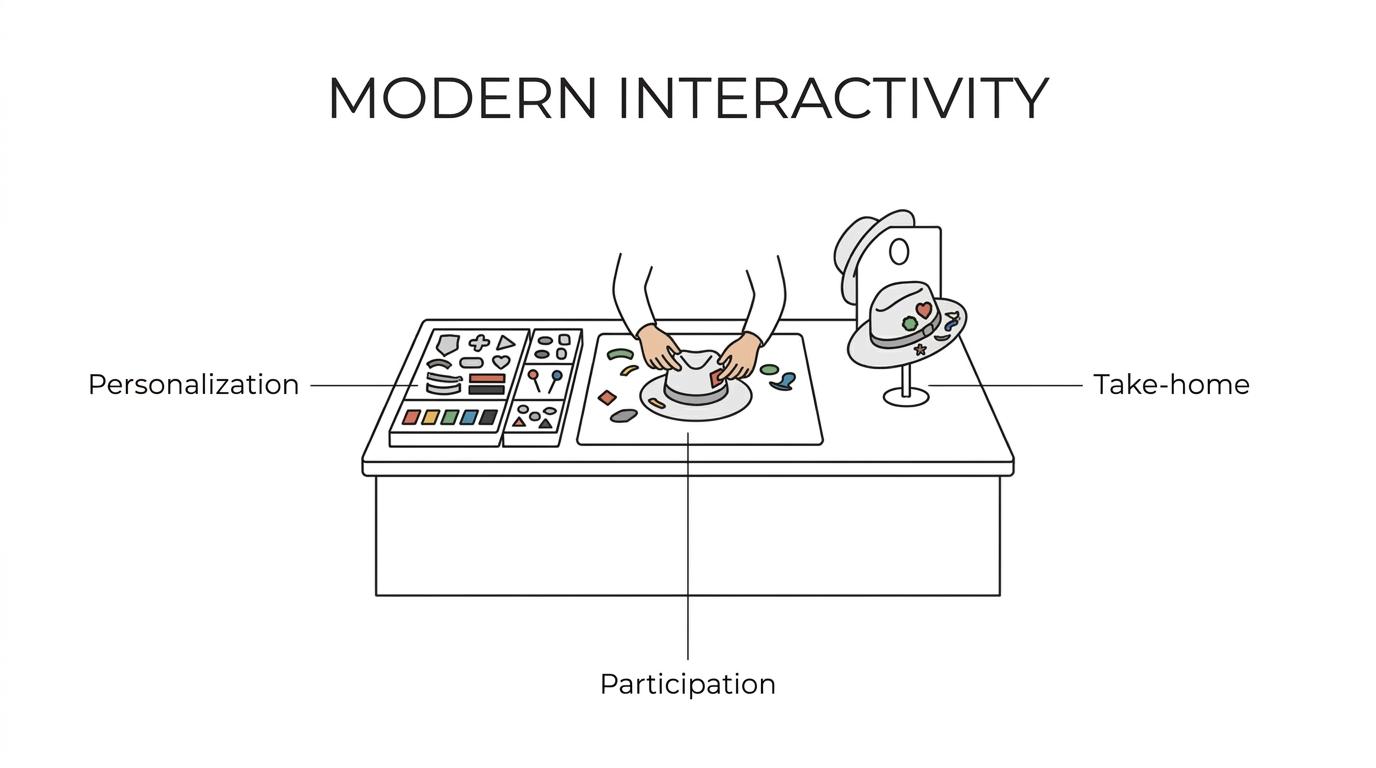
The final trait, take-home value, is often the one that makes an activation stand out weeks later. A printed photo can do this to a degree. A physical item someone designed themselves usually does it better. It extends the life of the event and keeps the experience present long after the schedule ends.
Why hands-on event entertainment creates stronger live engagement
Hands-on entertainment works because it fits the strengths of in-person gatherings. People show up to be present, not just informed. They want social energy, tactile engagement, and a break from screen-first interactions.
This is especially relevant for corporate events and trade shows. Freeman’s commercial trends reporting found that attendees respond strongly to hands-on demonstrations and small-scale interactive sessions when evaluating products and services at live events. There is also a notable gap between what attendees value and what some exhibitors assume they value. In plain terms, guests may be craving more activity than brands realize.
Interactive entertainment also performs well because it naturally creates dwell time. When people are making something, testing something, or customizing something, they stay longer. Longer stays often lead to better conversations, stronger brand recall, and more organic social sharing.
A good interactive activation can support several event goals at once:
- stronger guest engagement
- better traffic flow to a booth or feature area
- more natural conversation starters
- higher perceived event value
- memorable branded exposure
That mix is hard to match with passive entertainment alone.
Popular formats of interactive event entertainment
The category is broad, but not every activity carries the same weight. The strongest formats usually include creativity, movement, or decision-making.
Some common examples that fit today’s expectations include:
- custom product bars
- tasting and blending stations
- collaborative art walls
- live maker workshops
- game-based team challenges
- styled photo experiences with guest input
What makes these formats effective is not just novelty. It is the structure. They give guests clear entry points, simple choices, and a visible outcome. The activity feels accessible, even for people who would not normally volunteer to join an event feature.
A customization station is a particularly strong example because it combines all three core elements. Guests participate directly, personalize the result, and leave with something they actually want to keep. That is why customized merchandise and wearable activations have become increasingly attractive for corporate events, weddings, festivals, and private parties.
How to evaluate interactive event entertainment for event goals
Not every interactive idea is a good fit for every event. A smart booking choice depends on guest volume, timing, staffing, space, and the type of memory the host wants to create.
The table below offers a simple way to evaluate options before committing.
| Evaluation factor | What to ask | Why it matters |
|---|---|---|
| Guest participation | Do guests actively make choices or create something? | This is the clearest marker of real interactivity |
| Personalization depth | Is the outcome unique to each guest? | Custom outcomes create stronger memory and satisfaction |
| Throughput | How many guests can participate per hour? | Prevents long lines and frustration |
| Staffing support | Is guidance included on-site? | Skilled staff keep the experience smooth and welcoming |
| Take-home value | Does the guest leave with something worth keeping? | Extends the impact beyond the event itself |
| Brand integration | Can logos, colors, messaging, or themes be included naturally? | Keeps the activation relevant without feeling forced |
| Space and setup | How much room, power, and setup time are required? | Practical fit matters as much as creative appeal |
| Audience match | Does the concept fit the age range, style, and purpose of the event? | Good entertainment feels intentional, not random |
This evaluation process helps separate “fun ideas” from activations that truly support the event. A planner may love a concept visually, but if it cannot handle the expected guest count or deliver a satisfying takeaway, it may underperform in real conditions.
The best interactive entertainment is usually easy to join, visually inviting, and operationally solid. Guests should understand what to do within seconds. Once they step in, the experience should feel guided, polished, and rewarding.
Customized take-home entertainment has a strong edge
Among current interactive formats, customized take-home experiences stand out because they combine activity with lasting value. That combination is powerful.
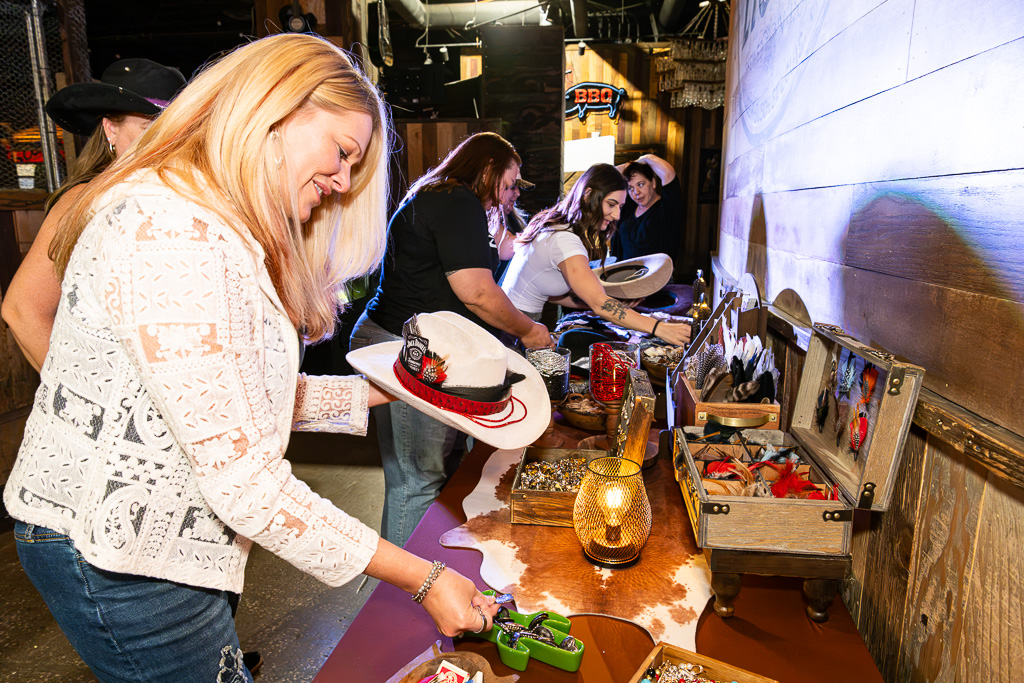
A mobile custom hat bar is a clear example. Guests choose a hat style, select patches, bands, pins, branding elements, or other embellishments, and work with on-site staff to create a finished piece they can wear immediately. The process is social, creative, and highly visual, which makes it a natural fit for live events.
According to Raising the Hat Bar, this type of mobile activation can be staffed on-site, includes design guidance and materials, and works across corporate functions, private parties, festivals, and similar gatherings. Each guest leaves with the completed hat as a keepsake. That structure checks every box in the modern definition of interactivity.
It is not just about making something pretty. It is about giving people a moment of self-expression inside a shared event environment. One person may go bold and playful. Another may choose a clean, branded look. A third may build something themed to the occasion. The same activation serves many personalities at once.
That versatility is part of the appeal.
Interactive event entertainment for corporate events
Corporate audiences respond well to entertainment that feels polished, social, and easy to connect back to the brand or meeting purpose. A passive attraction may draw a crowd briefly. A customization station gives people a reason to stay, talk, and participate.
For internal events, interactive entertainment can support team connection. Colleagues compare choices, comment on designs, and help each other make decisions. That informal collaboration often does more for atmosphere than a scheduled icebreaker.
For external events, the value expands. Branded design elements, logo patches, event color palettes, or campaign themes can be integrated into the experience without making it feel overly promotional. The guest still leaves with something personal, which keeps the branded touch welcome rather than intrusive.
Interactive event entertainment for weddings and private parties
Private celebrations call for entertainment that feels special to the hosts and memorable to the guests. That is where customization becomes especially effective.
A personalized activity gives guests something to do between key moments of the event. It can fill transitions naturally, create conversation among people who may not know each other well, and produce a keepsake that feels tied to the day rather than pulled from a generic party rental catalog.
Wearable take-home items work particularly well here because they blend utility with sentiment. Guests are not just handed a favor. They help create it.
Interactive event entertainment for festivals and community events
Large public events need activations that stop foot traffic and convert attention into participation. Visual appeal matters, but accessibility matters even more.
Festival guests tend to decide quickly whether something is worth their time. An activation with a clear process, a visible finished product, and approachable staff has a major advantage. People can see what others are making, imagine their own version, and join without much explanation.
This is also where scalable entertainment becomes important. Public events often need high throughput, strong staffing, and a setup that can handle constant energy over several hours. Interactive stations with repeatable processes and broad audience appeal tend to perform best.
What planners should expect from strong interactive event entertainment vendors
The entertainment concept matters, but execution matters just as much. A great idea can lose momentum if the setup is slow, the staffing is thin, or the guest process feels confusing.
Planners should look for vendors that offer more than the activity itself. The strongest partners usually provide:
- Clear guest flow: Participation feels intuitive from the first glance
- On-site guidance: Staff help guests create without taking over
- Quality materials: The finished result feels worth keeping
- Operational readiness: Setup, service, and breakdown are handled professionally
Those details shape how the activation feels in the room. Guests may not consciously notice staffing ratios or material quality, yet they notice the outcome. If the process feels polished, the event feels stronger.
That is why “interactive” should never mean chaotic or DIY in a loose sense. The best experiences are creative for the guest and structured behind the scenes.
As guest expectations keep rising, the definition of interactive event entertainment will likely stay centered on one idea: people want a real role in the experience. When they can make, choose, personalize, and keep something meaningful, the entertainment becomes more than a momentary distraction. It becomes part of why the event mattered.