Cowboy, Rancher, or Trucker? Picking the Right Hat Style for Your Event Theme
A hat does more than finish an outfit. At an event, it sets the visual “language” before anyone says a word, and it becomes a shared prop in photos, conversation, and keepsakes. The best choice is rarely about what’s trending. It’s about what your theme is trying to communicate and how guests will actually wear the hat for hours.
When you’re deciding between cowboy, rancher, and trucker styles, start with one simple question: do you want the hat to feel like wardrobe, fashion, or merch? Each silhouette answers that differently, and that’s why the right pick can make an event feel intentional within minutes.
The base hat is the theme’s loudest accessory
Themes are usually built from many small cues: invitations, florals, signage, music, lighting. A hat is different because it sits at eye level, repeats across a crowd, and travels home with guests. That combination makes it unusually powerful.
It also means mismatch shows fast. A dressy rooftop cocktail hour can look accidentally costume-like if everyone is in tall, high-crowned Western hats with dramatic brims. A Western charity night can fall flat if the headwear reads strictly sporty and casual.
Cowboy, rancher, trucker: three shapes, three messages
Each style comes with its own geometry and cultural shorthand. Crown height, brim width, and material choices all influence what guests feel when they put it on.
A helpful way to think about it:
- Cowboy hats feel iconic and ceremonial.
- Rancher hats feel styled and editorial.
- Trucker hats feel playful and brand-forward.
That’s the emotional layer. The functional layer matters too, especially for outdoor Las Vegas events where sun, wind, and heat can shape the whole guest experience.
Cowboy hats: bold Western energy with real presence
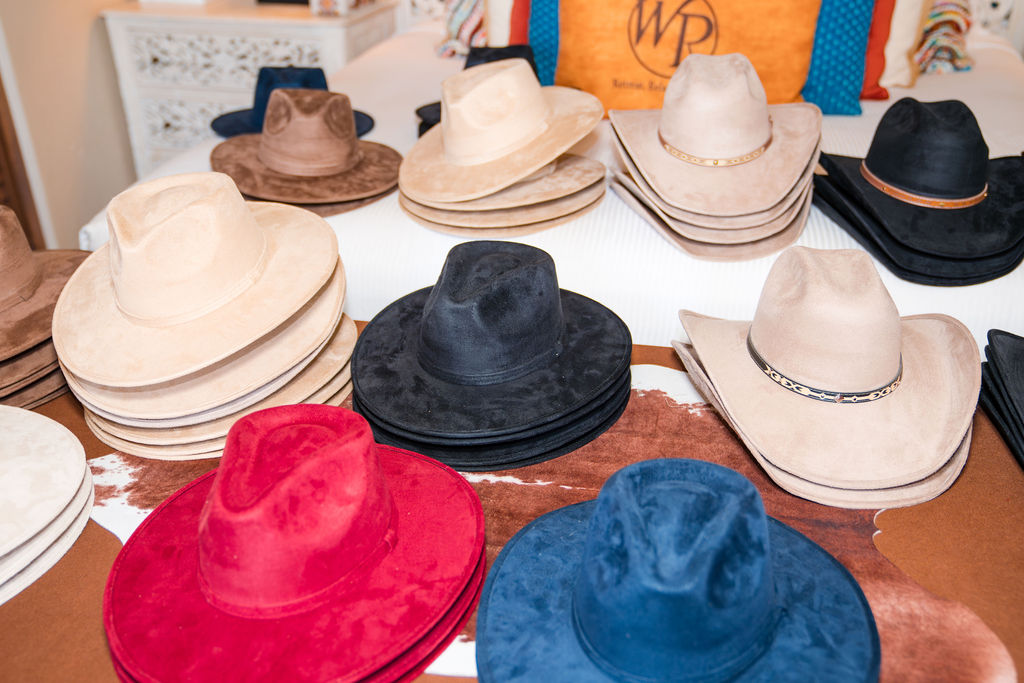
A cowboy hat has a tall crown and a wide brim, and that silhouette reads from across the room. It brings instant Western identity, even if the rest of the dress code is simple denim and boots.
Cowboy hats also photograph dramatically. The brim frames faces, the crown adds height, and the shape creates a clean outline against sky, stage lighting, or a desert backdrop. If the goal is to make a theme unmistakable, this is the clearest signal.
Cowboy hats tend to land best when the event calls for tradition, performance, or a statement: rodeo nights, country music energy, Western-inspired galas, rustic receptions, or brand events leaning into Americana.
Rancher hats: the fashion-forward bridge between Western and modern
Rancher hats sit in a sweet spot for many planners because they still give brim-and-crown impact, but with a flatter brim and a calmer profile. Guests who want a Western hint without going full rodeo often reach for this shape first.
Rancher styles also pair well with a wider range of outfits: sleek monochrome looks, boho florals, linen sets, jumpsuits, even tailored separates. That versatility can help when your guest list includes mixed tastes or when the theme is “desert chic” rather than strictly Western.
If your event is about style, creativity, and a curated palette, rancher hats often feel right at home.
Trucker hats: casual confidence and logo-ready simplicity
Trucker hats are built like caps: curved bill, lighter materials, breathable mesh, and an adjustable closure. They read casual on purpose. That makes them excellent for events where comfort and approachability matter more than formality.
They also have a practical advantage for activations and corporate gatherings: the front panel is prime real estate for patches, pins, and branding. Guests understand immediately that it’s meant to be worn, used, and kept.
Trucker styles work especially well for daytime outdoor events, team celebrations, festivals, trade activations, welcome parties, and anything that wants a relaxed, social vibe.
After a paragraph text, here’s a quick “vibe check” list that planners use when narrowing the field:
- Classic Western
- Desert editorial
- Streetwear casual
- Brand merch moment
- Country concert energy
- Poolside and sunny
Match the hat to the theme, the dress code, and the photo brief
Most event planning decisions have a hidden fourth stakeholder: the camera. Your hat choice changes shadows on faces, the way groups look in wide shots, and how consistent photos feel on social feeds and recap galleries.
The table below maps common event directions to hat styles that usually look and feel natural, plus a few customization notes.
| Event theme or setting | Best-fit hat style | Why it works | Customization direction |
|---|---|---|---|
| Western gala, ranch fundraiser, rodeo night | Cowboy | Strong silhouette that reads “Western” instantly | Keep trims refined; metallic pins, clean hatbands |
| Desert chic wedding welcome party | Rancher | Fashion-forward without feeling like costume | Tone-on-tone ribbons, dried florals, soft neutrals |
| Country concert pre-party or festival lounge | Cowboy or rancher | Brimmed hats suit the music culture and sun | Mix textures; bold bands, statement pins |
| Corporate offsite, team celebration, trade activation | Trucker | Comfortable, logo-friendly, easy to size | Branded patch sets; color-blocking to match brand palette |
| Pool deck event or daytime outdoor mixer | Trucker (or straw rancher) | Breathable and easygoing in heat | Bright patches, playful pins, minimal weight |
| Community fair, pop-up market, family-friendly festival | Trucker or rancher | Approachable and wearable across ages | Fun icon patches, initials, simple bands |
Weather and venue realities that change the “best” choice
A theme can be perfect on paper and still miss the mark if the hat doesn’t suit the conditions. Venue logistics matter as much as aesthetics, especially when hats are being worn all day.
Heat and airflow are big factors. Mesh-backed caps are comfortable in high temperatures, while wider brims offer more sun coverage. Wind is another factor in open-air venues; secure fit and weight distribution become meaningful when guests are walking between activations.
Indoors, brim size can collide with crowd density. Wide brims look stunning, but in tight cocktail layouts they can bump shoulders, block sightlines, or feel oversized for guests who are not used to brimmed hats. That does not mean you should avoid cowboy or rancher hats indoors. It just means the event flow and spacing should support them.
Formality is not a binary; it’s a spectrum
“Formal” and “casual” are helpful labels, yet most events live in the middle. Hats do too, depending on material and trim.
A polished felt Western hat can read upscale. A straw version reads daytime and relaxed. Rancher hats often sit comfortably in smart-casual spaces. Trucker hats stay casual, even when the outfit is elevated, which can be exactly what you want when the goal is to soften a corporate environment or encourage mingling.
If you’re writing a dress code, hats can be positioned as optional style rather than a requirement. That keeps guests comfortable and reduces the risk of someone feeling underdressed or in costume.
Building a hat moment guests actually want to join
A hat style choice becomes far more successful when it’s paired with an experience that makes guests feel confident wearing it. A guided customization station helps people choose a shape, adjust fit, and add details that match their personality and the event’s palette.
Customization also solves a common planner challenge: not everyone wants the same level of boldness. One guest may want a clean, minimal hatband. Another may want pins, chain, florals, and a statement patch. When the base style matches the theme, customization lets each guest land the look in their own comfort zone.
After a paragraph text, these are customization cues that tend to pair naturally with each hat family:
- Cowboy: classic bands, conchos, Western icons, burnished tones
- Rancher: ribbons, scarves, dried florals, modern metallic accents
- Trucker: logo patches, playful graphics, pin clusters, high-contrast color hits
A simple selection checklist planners can use in minutes
When you need to decide quickly, reduce the choice to three planning inputs: setting, dress code, and what you want guests to do in the hat (pose, dance, network, stay in the sun). Then confirm you can support sizing and comfort across a crowd.
After a paragraph text, here’s a fast, practical checklist you can run through:
- Define the visual anchor: Western tradition, fashion styling, or casual merch.
- Check the environment: outdoor sun, wind exposure, indoor spacing, heat.
- Confirm the dress code: cocktail, smart-casual, casual, theme attire.
- Decide the photo goal: dramatic silhouettes or easy, everyday wearability.
- Plan the customization range: minimal to bold, so every guest finds a fit.
The best hat choice is the one that travels home
At the end of a great event, guests leave with a feeling, a few standout photos, and one or two tangible pieces that bring the night back. A well-chosen hat can be that item, especially when it’s personalized on-site and feels right with the theme from the first moment.
Pick the silhouette that matches the message you want the room to send, then let guests make it their own. That balance of direction and self-expression is where event style turns into event memory.