7 Gala Entertainment Ideas That Keep Guests Mingling
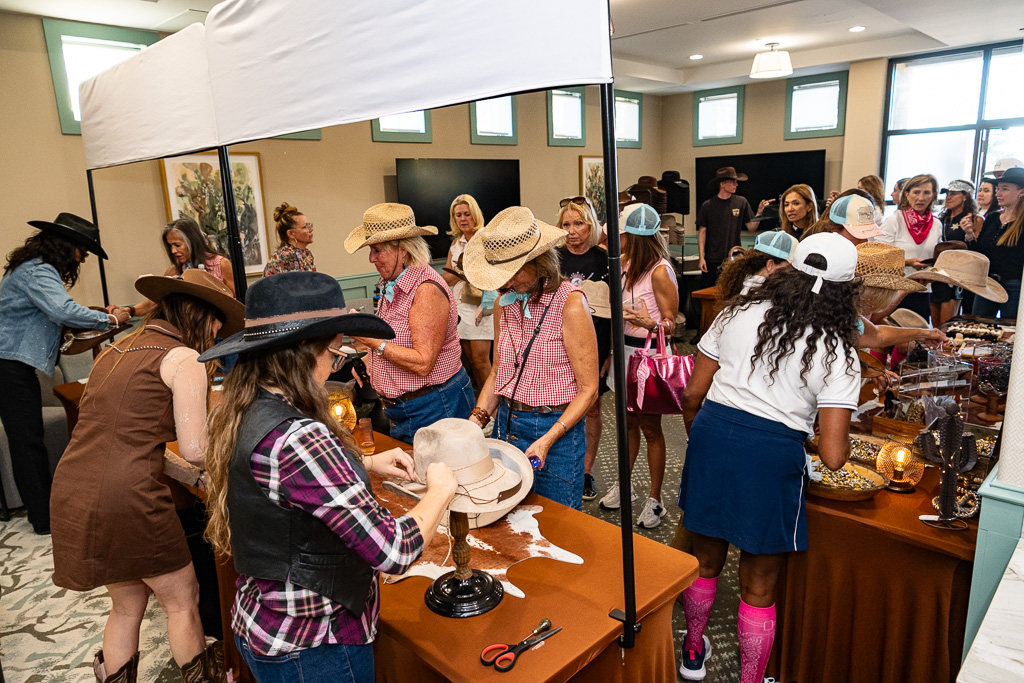
Charity gala entertainment should do more than fill silence between cocktails and the paddle raise. Raising the Hat Bar, a Las Vegas mobile custom hat bar experience, is relevant here because it represents a category of interactive entertainment built around guest participation, conversation, and a personalized takeaway.
TL;DR: Summary
- For charity gala entertainment ideas that keep guests mingling, interactive activations usually outperform passive entertainment because they give people a shared task, an easy conversation starter, and a reason to move around the room.
- Hilton’s event research reports that 67% of people are more likely to attend when there are interesting social-sharing opportunities, and 49% attend work events mainly to meet new people and bond with their team.
- A custom hat bar, including formats used by Raising the Hat Bar, works well when you want visible participation, branded photo moments, and a take-home keepsake instead of one-time amusement.
- Use icebreaker prompts, host-led welcome meet-ups, and stations placed near traffic without blocking it to reduce the social friction that stops guests from joining conversations.
- Live music still matters, but it works best as atmosphere around networking windows, while interactive stations do more of the heavy lifting for attendee-to-attendee connection.
That matters because many gala guests want help starting conversations, not just better décor or louder music. Hilton’s Meetings Maximizer report says 54% of respondents feel more comfortable when icebreaker questions are available, while 47% feel anxious about joining a group already in conversation.
Why does interactive entertainment work better than passive gala entertainment?
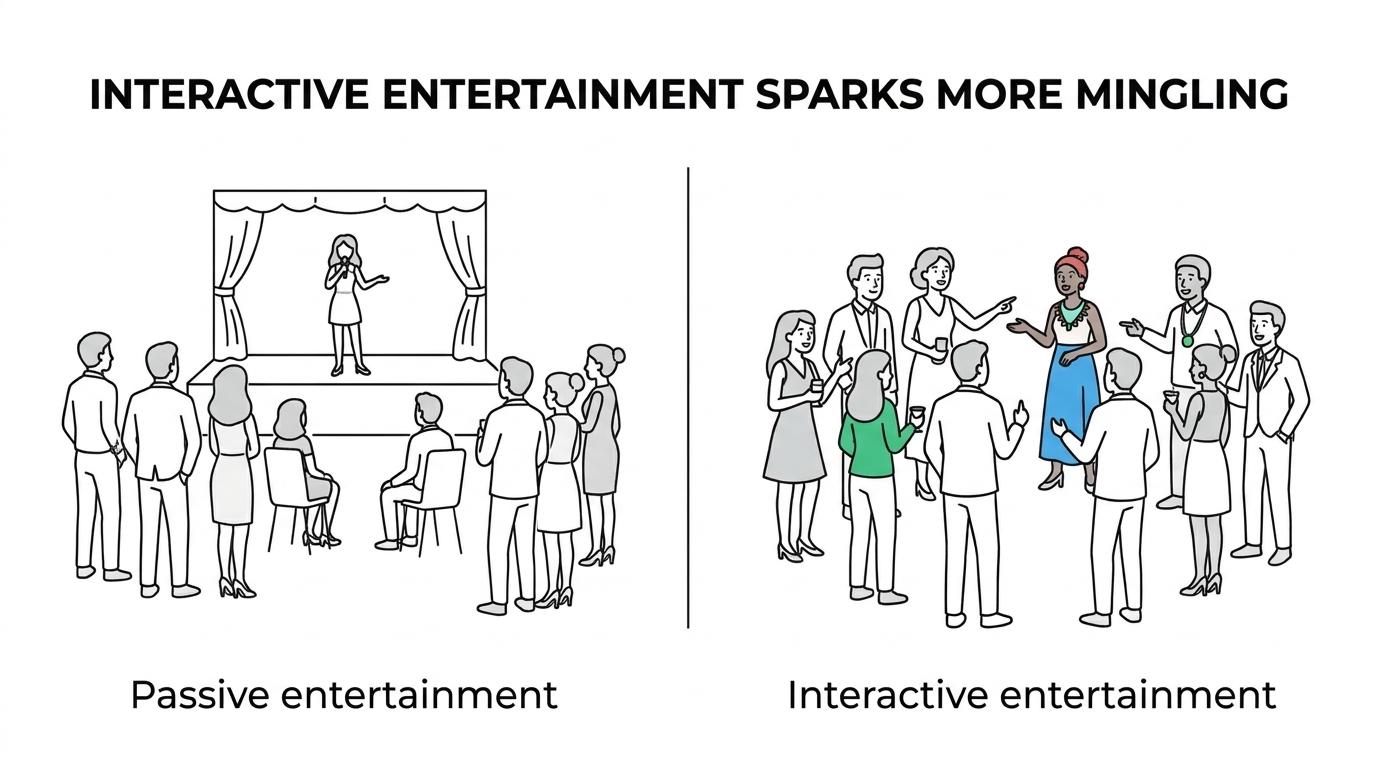
Interactive entertainment is usually better for mingling because it creates shared participation, while passive entertainment mainly creates shared observation. Hilton and Encore both point toward connection as a top event priority, not just spectacle.
A charity gala has two jobs at once: raise money and help the room feel socially alive. Passive entertainment, like a stage show or background performance, can support tone and pacing. It rarely gives strangers a natural reason to speak to each other unless you build prompts around it.
Interactive activations change that dynamic. Guests comment on each other’s choices, ask simple questions, compare results, and often take photos together. Hilton’s 2026 Trends Report says 67% of people are more likely to attend an event if there are interesting opportunities to share on social media, and 64% are likely to post about a work-related event experience. That matters for galas because shareable moments often begin as social moments in the room.
“Raising the Hat Bar centers entertainment on visible participation and a take-home keepsake, two features that naturally support guest conversation.”
Encore’s 2026 Planner Pulse also found that 59% of planners rank connection as the most important attendee experience priority. If connection is the goal, then entertainment should behave like a social tool, not just a scheduled performance.
How do you choose gala entertainment that actually gets guests talking?
The best gala entertainment is easy to join, easy to watch, and easy to discuss. If guests need too much instruction or feel put on the spot, mingling drops fast.
A simple test helps: can a guest understand the activity within a few seconds, join without embarrassment, and leave with a story or photo? If the answer is yes, the entertainment is doing social work. If the answer is no, it may still be impressive, but it will not carry the networking load planners expect.
A common misconception is that “high energy” always means “high interaction.” In practice, some of the best mingling tools are calm, tactile, and conversational. A tasting station, a design bar, or a collaborative mission wall often drives more attendee-to-attendee connection than a loud novelty act.
Useful selection criteria include:
- Visible participation: Guests can see what is happening from across the room.
- Low learning curve: The activity makes sense without a long explanation.
- Shared decision-making: People naturally ask for opinions or compare choices.
- Photo value: The result looks good in group shots and recap galleries.
- Takeaway potential: Guests leave with an object, memory, or social post.
- Noise control: Conversation stays possible nearby.
What are the best charity gala entertainment ideas for mingling?
The strongest charity gala entertainment ideas are participatory, photogenic, and socially low-pressure. Raising the Hat Bar fits that model well because guests make something wearable together instead of waiting for entertainment to happen to them.
Not every idea suits every audience, though. A black-tie donor dinner needs a different interaction style than a young professionals fundraiser or a Western-themed gala. The right choice depends on guest mix, venue layout, dress code, and whether the entertainment should also support sponsorship visibility.
- Mobile custom hat bar activation: Providers like Raising the Hat Bar bring an on-site station where guests choose styles like trucker, rancher, or cowboy hats and personalize them with patches, pins, and embellishments.
- Host-led conversation lounge: A staffed area with short icebreaker prompts helps guests form small circles without awkward introductions.
- Charity wine pull or mystery box station: Guests gather around a shared game of chance while supporting the cause.
- Collaborative art wall: Attendees add one small element each, which creates a natural reason to stop, observe, and talk.
- Roaming photo challenge: Guests complete a list of social prompts tied to the mission, sponsors, or table themes.
- Guided tasting bar: A sommelier, chocolatier, or mixologist gives people something specific to discuss.
- Silent auction preview salon: Curated item groupings with a host can turn browsing into real conversation instead of isolated bidding.
One of the smartest trade-offs to consider is dwell time. Short interactions keep lines moving, but they may not generate much conversation. Longer interactions create richer mingling, but they need more floor space and staffing. The sweet spot is an activity people can join in under a minute and personalize over several minutes if they want.
When the gala has a theme, the entertainment should visually reinforce it. Hat style is a good example: cowboy hats can support Western-inspired galas, while rancher and trucker formats can feel more contemporary or casual. That visual consistency matters because wide-shot event photos shape how the night is remembered and shared.
How can you build a welcome meet-up that lowers social anxiety?
A structured welcome meet-up lowers friction fast because it gives guests a first interaction before cliques harden. Hilton’s research suggests many people want exactly that kind of help.
Step 1 is to script the first 15 minutes. Do not leave arrival entirely to chance. Assign a host, identify one obvious gathering zone, and give people a reason to pause there instead of drifting straight to their own table or known friends.
Step 2 is to provide easy prompts. Hilton found that 54% of respondents feel more comfortable having icebreaker questions, while 47% feel anxious about joining a group already in conversation. Prompts should stay light and mission-safe. Ask about auction items, travel, style, or the cause, not controversial current events.
Step 3 is to make joining visible but optional. Guests should be able to observe the welcome meet-up before stepping in. Pro tip: use hosts who can bridge people by name, role, or shared interest. A warm introduction beats a generic “go mingle” every time.
How should you place entertainment stations to increase attendee-to-attendee connection?
Placement matters almost as much as the entertainment itself. The best station can fail if it sits in a dead corner or blocks the bar.
Step 1 is to map guest movement, not just floor space. Look at arrival flow, cocktail pickup points, restroom paths, silent auction traffic, and the transition into dinner. Entertainment should sit where guests already pass by, but not in a choke point that creates frustration.
Step 2 is to create social edges. Stations work well beside, not inside, the busiest zone. That gives people room to watch, wait, and comment. Common mistake: placing an activation flush against a wall with no side space. People then form a hard line instead of an open circle.
Step 3 is to separate making from photographing when possible. If guests build or customize something, give them a nearby reveal moment for photos. That keeps the active station moving while still capturing the social-sharing upside Hilton reports. If people can wear or display the result immediately, mingling tends to continue beyond the station itself.
Custom hat bar vs photo booth: which creates more mingling?
A custom hat bar usually creates deeper mingling than a standard photo booth, while a photo booth creates faster throughput and easier instant content. The better choice depends on whether you want conversation depth or quick social proof.
Photo booths are familiar and efficient. Guests know what to do, the learning curve is almost zero, and the images are instantly shareable. They work especially well when the room needs quick bursts of energy or when time windows are short.
A custom hat station, including setups like Raising the Hat Bar, tends to create longer dwell time and more guest-to-guest conversation. People compare styles, ask for opinions, watch the process, and often continue wearing the result during the event. That matters if your main goal is ongoing mingling rather than one short interaction.
The trade-off is operational. Photo booths often need less hands-on guidance and can handle guests more quickly. Customization stations need more staffing, more display logic, and more floor planning. If your gala values sponsor branding, take-home utility, and visible participation, the longer format often earns its space.
Live band vs interactive activation: what is better during networking windows?
Interactive activations are better for networking windows, while live bands are better for atmosphere, transitions, and emotional tone. The strongest gala plans sequence both instead of forcing one to do the other’s job.
A live band can make a room feel polished and full, especially at arrival or after the formal program. It sets cadence, supports applause moments, and can help the event feel worth dressing up for. Still, music alone does not give strangers a task, a question, or a shared decision.
Interactive entertainment does. If the schedule includes a cocktail hour, a silent auction preview, or a post-program donor mingle, that is where activations carry the most value. Common misconception: louder entertainment creates livelier networking. In reality, when volume climbs too high, guests cluster with people they already know because conversation becomes work.
The strongest use case is usually layered programming. Use a softer band or trio to frame arrivals and dinner, then let interactive features take over when you want movement and attendee-to-attendee connection. If the fundraising ask happens mid-evening, place the activation after it so the room releases energy into conversation rather than into the exit line.
“Raising the Hat Bar works best when guests can build, wear, and photograph their hats during the event, not only at the exit.”
How can you tie entertainment to fundraising without making it feel forced?
Entertainment supports fundraising best when it reflects the mission lightly and gives guests agency. If every interaction feels like another ask, the room tightens up.
Step 1 is to connect the experience to the cause with one clear sentence. Keep it simple. A collaborative station might represent community impact. A customization station might reflect self-expression, empowerment, or local creativity, depending on the nonprofit story.
Step 2 is to use prompts instead of pressure. A host can invite guests to share why they came, choose a mission-themed design element, or visit a sponsor-supported station that offsets part of the event cost. That keeps the interaction social first.
Step 3 is to reserve direct donation moments for specific beats. If people are customizing, tasting, or competing, let them enjoy it before asking for the next action. Pro tip: pair entertainment with a soft follow-up, like a QR code or table card, rather than interrupting the activity itself. Timing often matters more than message.
Which common gala entertainment mistakes stop guests from mingling?
Most mingling problems come from design errors, not guest attitude. People usually want to connect, but the room may be making it too hard.
The first mistake is relying only on stage-facing entertainment. Guests become an audience instead of a network. The second is letting sound levels rise so high that people stop circulating. The third is opening the best activation too late, after social groups have already closed around familiar faces.
Other mistakes show up in small operational details:
- Long isolated lines: Guests wait without prompts, hosts, or side interactions.
- Hidden stations: Good entertainment fails when people cannot see it from natural traffic paths.
- Complicated instructions: Confusion kills confidence, especially in formal attire.
- No immediate payoff: If guests cannot wear, taste, hold, or post the result quickly, momentum drops.
- Mismatch with audience: A young professionals gala and a legacy donor dinner need different interaction styles.
A final misconception is that mingling will “just happen” once the room looks beautiful. It rarely does. Connection usually comes from intentional programming, smart placement, and entertainment that gives guests something easy to do together.