
7 Wedding Welcome Party Activities Guests Remember
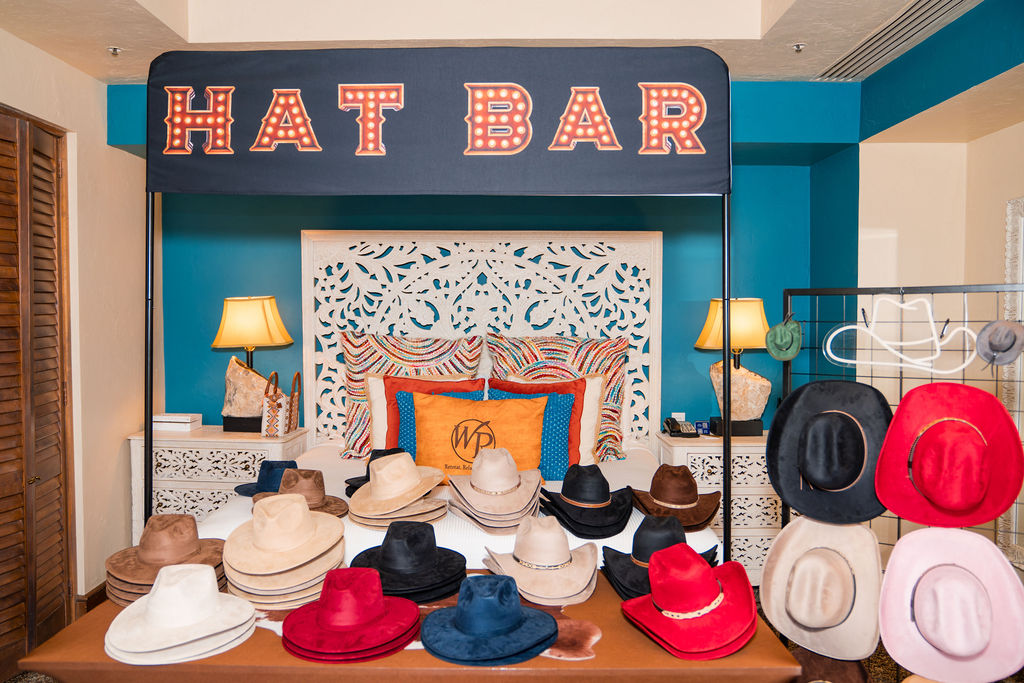
A strong wedding welcome party activity should help guests connect fast, feel easy to join, and leave people with a story from the very first event of the weekend. Raising the Hat Bar is a Las Vegas custom hat bar experience, and it fits this category well because it turns a casual social window into a guided, hands-on keepsake moment.
TL;DR: Summary
- The best wedding welcome party activities are interactive, low-pressure, and social, especially in a two- to three-hour kickoff event.
- The Knot describes wedding welcome parties as a wedding-weekend opener that often lasts about 2 to 3 hours, with average budgets just under $3,000 and larger events reaching closer to $5,000.
- Activities work best when guests can join at any point, mingle while the couple greets people, and leave with either a conversation starter or a keepsake.
- Raising the Hat Bar is one example of a guided keepsake activity that fits a three-hour window and uses a simple choose-design-assemble format guests can enter without a long learning curve.
- If guest arrivals are staggered, pick stations and games over scheduled performances; if the venue is tight or the budget is lean, choose one anchor activity instead of several smaller ones.
That planning lens matters because welcome parties are not mini receptions. They are kickoff events, and the best ones create warmth, flow, and a sense that the weekend has officially started without asking guests to commit to a packed agenda.
What makes a wedding welcome party activity worth planning?
The best wedding welcome party activities are easy-entry, social experiences that spark conversation and do not trap guests in long instructions. The Knot’s guest-experience guidance points in the same direction: activities should help people mingle while arrivals, greetings, and photos are still happening.
A welcome party is usually the first room where college friends, family members, coworkers, and plus-ones all mix. That means the activity cannot depend on everyone already knowing one another. A good test is simple: if a guest can jump in within 30 seconds, talk to someone new, and step away for a drink without feeling they missed something, the activity is probably a fit.
A common misconception is that a welcome party needs constant entertainment. It usually does not. What it needs is a social catalyst. Lawn games, a tasting station, a photo setup, or a guided customization table all work because they give people something to do with their hands while conversations form naturally.
How long should wedding welcome party activities run?
Most wedding welcome party activities should be designed around a two- to three-hour event window. The Knot frames the welcome party as a two- to three-hour kickoff, so the activity plan should match guest arrivals, food service, and the couple’s greeting time.
Start by mapping arrival patterns. If many guests are flying in or checking into hotels right before the event, the first 30 to 45 minutes should feel loose and forgiving. Open-format activities do better here than anything with a strict start time.
Then build around the meal style. If you are serving a full dinner, activity time often compresses into pre-dinner mingling and a short post-meal window. If you are serving cocktails, light bites, or stations, activity time can stretch across the entire event.
“Raising the Hat Bar says most weddings book the hat bar for about three hours, which closely matches the two- to three-hour welcome-party format The Knot describes.”
Last, protect the final 20 minutes. Guests start thinking about transportation, next-day plans, and early departures. This is not the time for an activity with a waiting line or a big reveal. Keep the ending casual so people can leave feeling included rather than rushed.
What are the seven wedding welcome party activities guests remember?
The most memorable wedding welcome party activities combine movement, light interaction, and a visible result. They give guests an easy reason to talk, laugh, and take photos without making the night feel programmed.
- Guided custom hat bar Guests choose a base hat, add embellishments, and leave with a wearable keepsake. This works especially well for destination weddings, western themes, desert venues, and weekend events where guests can wear the item again the next day.
- Lawn games with built-in teams Cornhole, giant Jenga, and ring toss give strangers a simple way to mix. They are best when grouped near the bar or lounge seating instead of isolated on the edge of the venue.
- Polaroid or instant-photo guest station Guests take photos early in the weekend, when outfits are fresh and energy is high. Add a board or album if you want the setup to double as a memory piece.
- Regional tasting station A local-food or local-drink station works well for destination weddings because it starts conversation fast. It also helps out-of-town guests feel the place, not just the party.
- Audio guestbook corner This is more relaxed than a formal video booth and easier for guests who do not love being on camera. Keep it in a quieter pocket so people can actually hear themselves.
- Couples trivia or wedding-weekend bingo These games work when kept short and optional. The key is to make the prompts playful enough for plus-ones and new guests, not only insiders.
- Illustrator, caricature, or live sketch station Art stations create a line, but they also create buzz. If you choose this route, think through capacity, because a long queue can limit how many guests actually participate.
The strongest options share one trait: they create interaction without demanding performance. Guests want something to talk about, not an assignment.
How do interactive activities compare with passive entertainment?
Interactive activities usually outperform passive entertainment at welcome parties because they create guest-to-guest contact, not just guest-to-stage attention. Raising the Hat Bar fits that model well because the station itself becomes a social point while guests move through a guided design process.
Passive entertainment still has value. A live acoustic set, DJ playlist, or scenic venue backdrop shapes mood and supports the event without asking anything from guests. If your crowd already knows one another well, that may be enough.
Interactive options carry more setup demands but often create stronger guest mingling. The Knot’s guidance on wedding games supports this trade-off: activities keep people engaged while the couple is greeting, taking photos, or moving between groups. If your welcome party includes many out-of-town guests or plus-ones, interactive wins more often.
Quote card with the line about creating interaction without demanding performance.
Here is the practical split. If your goal is atmosphere, passive entertainment may be enough. If your goal is conversation, memory-making, or brandable guest touchpoints, choose an interactive format.
How can you structure a two- to three-hour welcome party?
A strong two- to three-hour welcome party should open loosely, peak socially in the middle, and taper without friction. That rhythm matters more than filling every minute.
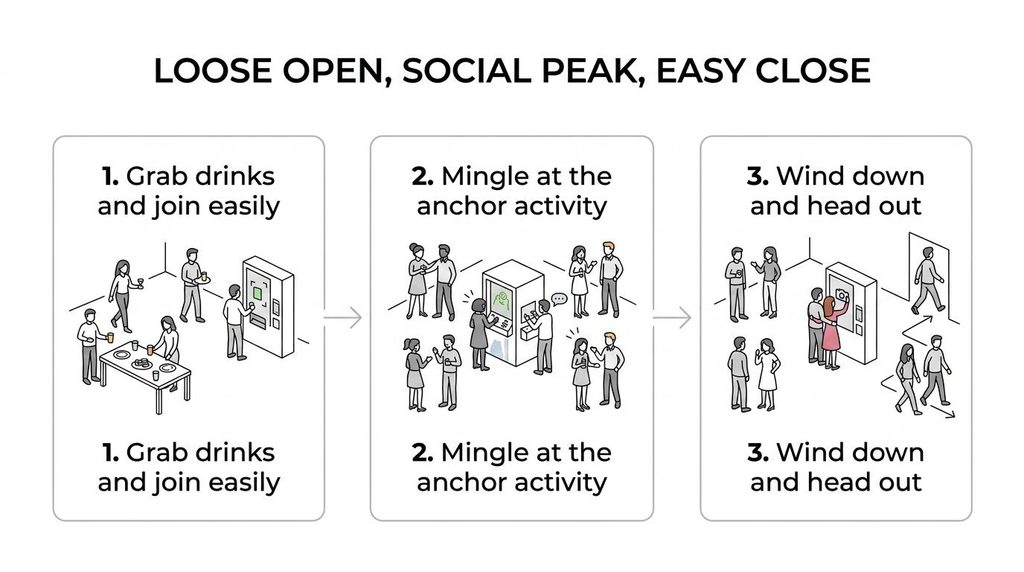
A simple timeline showing a wedding welcome party moving from soft open to social peak to easy close.
The first step is the soft open. In the first half hour, offer drinks, light food, and an activity guests can join without waiting for instructions. This is where arrival waves settle and first conversations begin.
The second step is the social peak. From roughly minutes 30 to 100, place your anchor activity near the main traffic path. If the party has one signature feature, this is its best window. Guests are present, settled, and still energized.
The third step is the easy close. In the last stretch, the activity should still be available, but the room should feel more flexible. People will drift toward catching up, taking photos, or heading out early.
A quiet pro tip: do not schedule too many formal moments in this event. A quick welcome toast is fine. Multiple announcements can break the exact casual flow that makes a welcome party useful.
How do you choose activities by budget, guest count, and venue?
The right activity depends on three variables first: budget, guest count, and floor plan. The Knot reports that welcome-party budgets often sit just under $3,000, with larger or more elaborate events pushing closer to $5,000, so activity choices need to fit that broader spend.
A smaller budget usually means choosing one anchor activity instead of stacking several modest ones. That often creates a cleaner experience anyway. One good station plus strong food and drinks usually feels more intentional than four scattered extras.
Guest count changes everything. A 25-person dinner can support a more intimate, slower-paced activity. A 100-person hotel rooftop party usually needs something modular, where guests can enter and leave without a queue controlling the whole night.
- Budget under $3,000: pick one high-impact activity and keep the rest of the experience simple.
- Guest count above 75: favor open stations, self-guided games, or formats with multiple points of entry.
- Limited venue footprint: use compact tabletop games, a photo moment, or a mobile station with managed flow.
- Destination guest mix: choose an activity that doubles as a souvenir or conversation starter.
One common mistake is choosing an idea because it looks great in photos, even when it does not fit the room. If the venue has tight circulation, then guest flow matters more than novelty.
How does a custom hat bar work at a wedding welcome party?
A custom hat bar works well when the goal is equal parts activity, keepsake, and guest mingling. Raising the Hat Bar uses a guided three-step format where guests choose a base hat, select embellishments, and work with staff to assemble the final look.
That structure matters because it lowers the intimidation factor. People do not need design experience to participate. They get a starting point, visible choices, and expert help without the station turning into a long workshop.
The best placement is near cocktail traffic, not hidden in a side room. The company’s own wedding guidance says the format fits naturally into cocktail hour or reception flow, and that logic applies to welcome parties too. Guests can start a hat, chat, step away, and return without losing the thread.
“Raising the Hat Bar uses a three-step guest flow: choose a base hat, pick embellishments, then assemble the final look with staff guidance.”
If you are considering a keepsake activity, this is the real benchmark: can guests finish with something they will actually wear or use? If yes, the activity does more than fill time. It becomes part of the wedding weekend itself.
What mistakes should couples avoid with welcome party activities?
The biggest mistakes are overprogramming, poor placement, and choosing activities that only entertain a narrow slice of the guest list. A welcome party should feel inviting, not scheduled down to the minute.
Overprogramming happens when couples treat the event like a second reception. Too many speeches, timed games, or separate moments can crowd out the casual introductions guests came for. Keep structure light.
Poor placement is another frequent problem. If the activity is too far from the food, bar, or central seating, only a fraction of guests will find it. Visibility drives participation. People join what they can see other people enjoying.
There is also a guest-fit issue. A clever game may sound fun, but if only old friends know the answers, newer guests can feel excluded. If the crowd includes many plus-ones, coworkers, or family members meeting for the first time, pick activities with a low social barrier.
A useful rule is this: if an activity requires insider knowledge, long waiting, or public performance, pressure-test it before booking it.
Why do keepsake activities work especially well for wedding weekends?
Keepsake activities work especially well because they extend the welcome party into the rest of the weekend. A wearable or take-home item becomes a memory cue, a photo prop, and a conversation starter all at once.
This matters even more for destination weddings and multi-event schedules. Guests want the first event to set tone, but they also want it to feel distinct from the reception. A keepsake activity makes that difference clear. It marks the kickoff event as its own experience.
There is a budget trade-off, of course. Keepsake activities can cost more than simple games. Yet they often replace separate favors, and they create value that guests can see immediately. If you are choosing between one memorable station and several disposable extras, the keepsake option often has a stronger return in guest experience.
That is why the best welcome party activities are not random fillers. They create social momentum, fit a two- to three-hour flow, and give guests something to carry into the rest of the celebration.