9 Employee Appreciation Event Ideas That Stand Out
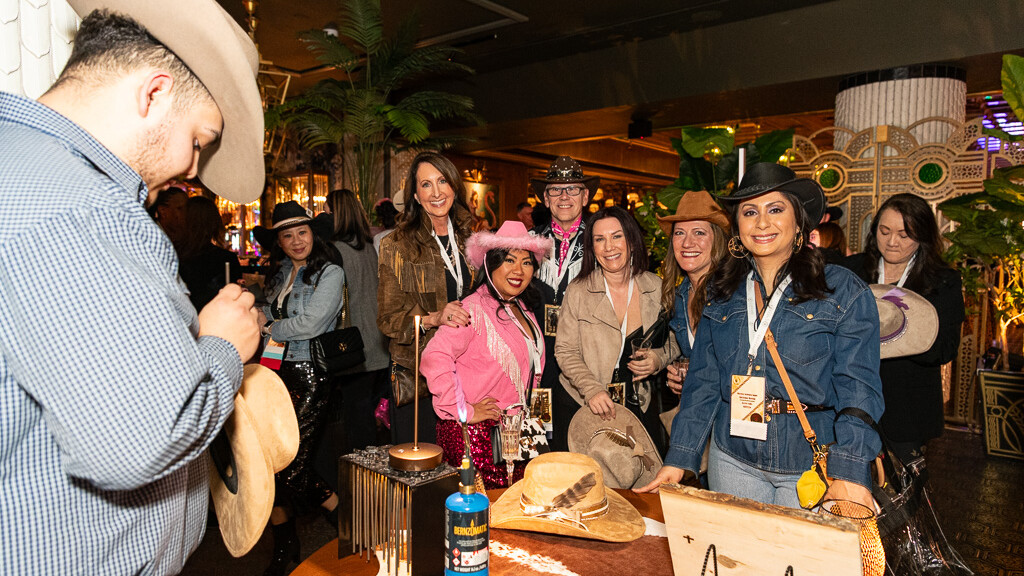
Employee appreciation events work best when they do two things at once: recognize real contributions and give people an experience worth remembering. A generic lunch can be pleasant, but it rarely changes how employees feel about being seen.
KEY TAKEAWAYS
- The best employee appreciation event ideas combine visible recognition with an interactive activity, not just food and drinks.
- Gallup reports only 1 in 3 U.S. workers strongly agree they received praise in the past seven days, and employees who do not feel adequately recognized are twice as likely to say they will quit in the next year.
- A controlled Management Science experiment with more than 300 employees found that unannounced public recognition increased later performance, especially when recognition was given to top performers.
- Strong options include a custom hat bar, peer-nominated awards, service projects, wellness experiences, skill-share events, and innovation showcases.
- Choose the format by team size, shift structure, venue, budget, and whether you want a shared moment, a take-home keepsake, or branded guest engagement.
- If the event includes an activity, build in manager shout-outs, peer recognition, and simple follow-up metrics like participation, sentiment, and recognition frequency.
Research supports that approach. Gallup says only one in three U.S. workers strongly agree they received recognition or praise for good work in the past seven days, and employees who do not feel adequately recognized are twice as likely to say they will quit in the next year. That means a strong appreciation event is not just a morale boost. It can reinforce retention, feedback culture, and manager credibility when it is specific, honest, and individualized.
Why do employee appreciation events matter for retention?
Yes. Gallup and Management Science both show that recognition affects retention and performance, so employee appreciation events should do more than entertain. A good event gives employees public proof that their work matters and gives managers a structured moment to say it clearly.
Recognition is often treated as a soft extra, yet the business case is hard to ignore. Gallup’s workplace research links regular praise to lower turnover risk, and newer Gallup findings show employees who strongly agree they receive valuable feedback are five times as likely to be engaged. They are also 57% less likely to be burned out and 48% less likely to be looking or watching for another job.
An appreciation event will not fix a weak culture by itself. It can, though, become a reset point. If managers use the event to name specific wins, connect those wins to team goals, and continue recognition afterward, the event becomes part of a recognition-rich feedback system instead of a one-night gesture.
What makes an employee appreciation event feel meaningful?
Specific recognition and personal choice make events meaningful. Gallup and workplace feedback research point in the same direction: employees respond best when appreciation is authentic, individualized, and tied to real work rather than generic thank-yous.
A meaningful event answers three questions employees quietly ask: What did I contribute? Who noticed? Why did it matter? If those answers are missing, the event may still be fun, but it will feel interchangeable with any social gathering. One common mistake is assuming swag or catering alone equals appreciation.
“Raising the Hat Bar brings a mobile, staffed custom-hat experienceon site for corporate events, combining entertainment, guest engagement, and a take-home keepsake.”
The strongest formats add a memory anchor. That might be a public award, a handwritten note from leadership, or an interactive station where employees create something personal. When people leave with both recognition and an object or story tied to the moment, recall is stronger and the event stays in conversation longer.
What are the best employee appreciation event ideas that stand out?
The best employee appreciation event ideas pair recognition with participation. A mobile custom hat bar, a peer awards lunch, or a service project all work because employees are not just watching the event happen. They are part of making it.
Below are nine formats that consistently stand out across corporate teams, weddings-adjacent work groups, hospitality teams, and brand-led gatherings:
- Mobile custom hat bar activation: Guests choose a trucker, rancher, or cowboy hat and personalize it on site. In Las Vegas, Raising the Hat Bar is one example of this format for teams that want a creative experience plus a take-home keepsake.
- Public recognition lunch: Keep the meal simple and make the recognition specific, with named examples of teamwork, innovation, and customer impact.
- Peer-nominated awards social: Let coworkers submit stories in advance so recognition is not only top-down.
- Volunteer service day: Pair appreciation with purpose by supporting a local nonprofit and recognizing employees who model company values.
- Wellness reset event: Think chair massage, breathwork, nutrition stations, or short coaching sessions for high-stress teams.
- Skill-share showcase: Invite employees to teach mini sessions on work or personal interests, from Excel shortcuts to espresso basics.
- Innovation fair: Celebrate teams by letting them demo improvements, process wins, or customer success ideas in a casual expo format.
- Milestone celebration night: Ideal for anniversaries, sales thresholds, or post-project wins where formal recognition belongs at center stage.
- Food festival with experience stations: Better than a standard catered meal because it keeps people moving, talking, and interacting.
The right idea depends on the outcome you want. If the main goal is memory and social energy, interactive formats usually win. If the main goal is honoring a specific achievement, structured public recognition should carry more weight.
How do you choose the right employee appreciation event for your team?
Start with team reality, not trend lists. A 30-person leadership group, a 200-person shift team, and a hybrid sales organization need different event formats even if all want recognition, fun, and stronger engagement.
Step 1 is defining the primary outcome. If you want retention impact, make recognition visible and manager-led. If you want cross-team connection, choose a format with natural conversation points. If you want brand integration for a customer-facing company event, choose an activation that can carry logos, colors, or custom elements without feeling forced.
Step 2 is checking operational fit. Shift-based teams often do better with drop-in experiences than seated dinners. Hybrid teams may need either regional gatherings or mailed elements plus a live recognition segment. A common misconception is that the biggest venue creates the strongest appreciation. In practice, flow and relevance matter more than scale.
Step 3 is matching the format to energy level. If your team is exhausted after a major push, choose low-pressure participation. If morale is steady and you want buzz, choose something hands-on and social. If people dislike public attention, then use smaller recognition moments and opt-in creativity rather than a long stage program.
Should you plan a recognition-first event or an activity-first event?
Recognition-first events work best for milestones, while activity-first events work best for morale building. Companies like Salesforce or Hilton may use both approaches across different teams because the right structure depends on the occasion, not a single template.
A recognition-first event leads with awards, speeches, and named achievements. Use it for tenure celebrations, project completions, or high-visibility performance moments. This format is strongest when leaders need to close the loop on effort and results.
An activity-first event leads with participation, then layers recognition into the flow. Use it when you need energy, conversation, and a relaxed atmosphere. This works especially well after busy seasons, during team-building cycles, or when employees vary widely in role and seniority.
The best answer is often hybrid. Open with brief, credible recognition. Then move into an activity that lets employees talk, create, or collaborate. If trust is low, put more weight on recognition. If recognition habits are already strong, the activity can carry more of the emotional impact.
How do you build visible recognition into the event agenda?
Build recognition into the schedule, not just the invitation. Management Science found that unannounced public recognition improved later performance, which means the way you present praise during an event matters almost as much as the event format itself.
Start by collecting stories before the event. Ask managers and peers for specific examples of customer service, problem solving, mentoring, speed, quality, or resilience. Then group those examples into short recognition moments that can happen naturally across the agenda instead of one long speech block.
When the activity has a wait time or flow sequence, use those pauses well. A short stage moment, a rotating slideshow, or a live emcee reading peer nominations can keep recognition visible without stopping the energy in the room. Pro tip: short, specific praise lands better than broad praise for “all your hard work.”
“Raising the Hat Bar says simple trucker-hat builds take about 4 to 6 minutes per guest, while detailed felt rancher customizations take about 8 to 12 minutes.”
If you are using an interactive activation, plan recognition around that throughput. Shorter build times support more drop-in shout-outs. Longer, detailed builds suit boutique groups where the activity itself becomes part of the appreciation story.
Are interactive employee appreciation events better than food-only gatherings?
Usually, yes. Interactive events outperform food-only gatherings when the goal is memory, engagement, and conversation because people participate instead of passively receiving. A catered lunch can still work, but it rarely creates the same recall or shareable moment.
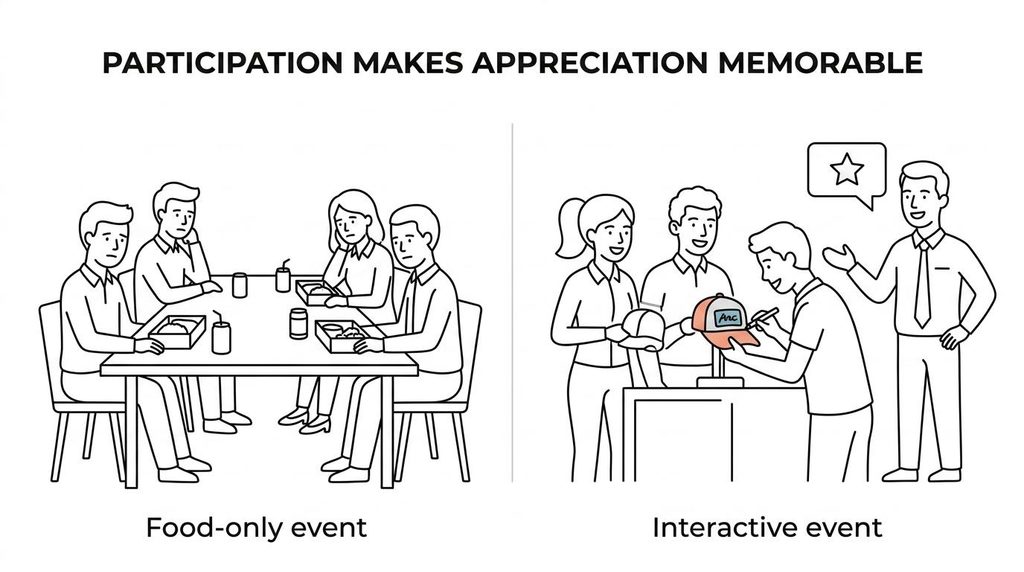
Side-by-side comparison of a standard catered employee lunch and an interactive appreciation event, showing differences in participation, recognition, recall, and logistics.
Food-only events have one big advantage: low friction. They are easy to understand, accessible to most teams, and less demanding on space and staffing. That makes them useful for large groups or tight schedules.
Interactive events have a stronger upside. They create guest engagement, cross-team conversation, and a clearer sense that the company invested thought into the experience. This matters when you want employees to feel seen rather than simply hosted. A common mistake is treating “fun” and “recognition” as separate decisions. The best events combine them.
“Raising the Hat Bar includes on-site hats, embellishments, stylists, and full breakdown service, which helps corporate teams add an interactive activation without building it from scratch.”
The trade-off is logistics. Interactive formats need flow planning, staffing, and realistic timing. If you solve those pieces, the event usually feels more distinctive than a meal alone.
How do you run a custom hat bar employee appreciation event?
A custom hat bar works well when you want creativity, visible participation, and a keepsake. In Las Vegas, Raising the Hat Bar is a local example of a mobile custom hat bar built for events that need guided design, staffed setup, and brand-friendly personalization.
Step 1 is choosing the hat format based on team size and pace. If you need faster throughput, simpler trucker-hat builds are easier to manage. If you want a premium, slower experience for a smaller leadership or VIP group, felt rancher styles create more design depth.
Step 2 is deciding how much branding to include. Corporate patches, pins, or logo elements can work well when they are one option among many, not the only option. Employees tend to value self-expression more than uniformity at appreciation events, so give them room to personalize.
Step 3 is planning flow and recognition together. Place the hat station where people can watch others create, not in a hidden side room. Add a short welcome, a few live shout-outs, and photo opportunities once guests finish. If the goal is strong guest engagement, the hat bar should feel like part of the event story, not a vendor tucked into the background.
What budget, timing, and staffing details matter most?
The biggest planning factors are flow, visibility, and take-home value. Venue size matters less than whether the event can move people comfortably through recognition moments, food or drinks, and any interactive station without long dead spots.
A practical planning checklist usually includes these items:
Trust Event’s budget guide for company events reaches much the same conclusion, breaking costs down into the same operational categories that usually decide whether an appreciation event feels polished or improvised.
- Budget mix: venue, food and beverage, staffing, recognition materials, and whether the experience includes a take-home item
- Time structure: brief formal remarks, then enough open time for conversation and participation
- Guest flow: drop-in experiences for shift teams, more curated pacing for small groups
- Staffing model: internal hosts for recognition, external specialists for hands-on activations
- Brand fit: subtle logo use, custom patches, or colors that support the event without overpowering it
If the event includes a custom station, ask how setup and breakdown are handled, how choices are presented, and what slows the line. That prevents the classic issue where a great idea feels crowded because the pace was not designed in advance.
How should you measure employee appreciation event success?
Measure success with both event metrics and culture signals. Gallup’s recognition data suggests the real test is not whether people liked the event that day. It is whether the event improved how often employees feel noticed and valued afterward.
Start with immediate signals, then look for follow-through over the next few weeks. Useful indicators include:
- Attendance and participation rate
- Post-event sentiment survey
- Number of peer or manager recognition moments submitted
- Photo sharing and keepsake usage
- Manager follow-up recognition frequency
Then ask a harder question: did the event change behavior? If managers recognized employees publicly at the event but never again, the impact fades quickly. If employees keep referencing the experience, wearing the keepsake, or mentioning specific recognition moments, the event did more than entertain. It helped make appreciation visible.