
Questions to Ask Before Booking Event Entertainment
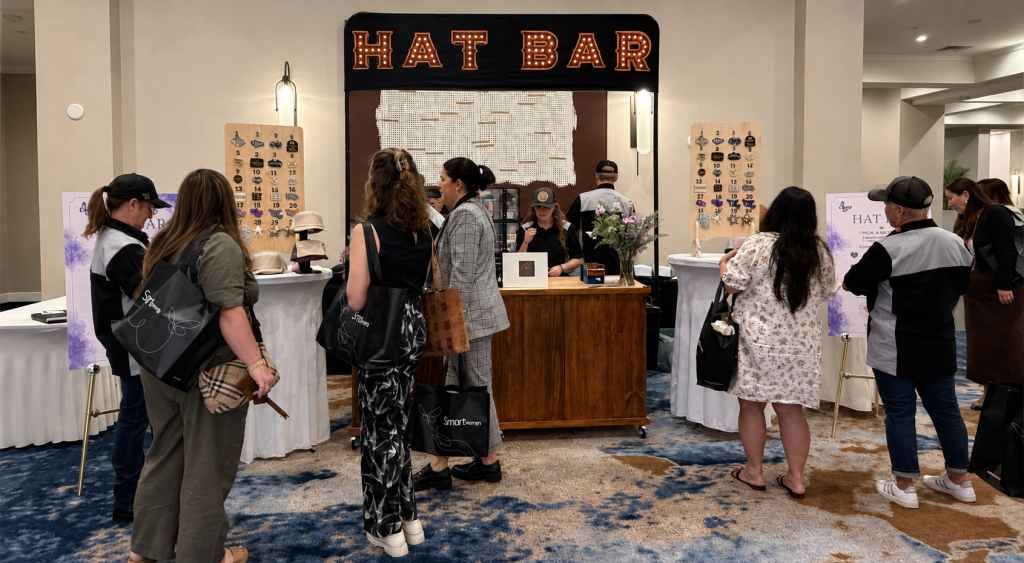
Booking entertainment is rarely just about picking the act or activation that looks the most fun. The stronger decision comes from asking sharper questions before the contract is signed, while there is still room to shape timing, staffing, guest flow, and budget around the event you are actually producing.
That matters even more now that “entertainment” can mean many different things. A live band, a magician, a DJ, a roaming performer, and a mobile hat bar all create energy, but they operate very differently on site. One needs sound support. Another needs cue timing. An interactive station needs product, staff, setup space, and enough throughput to serve a crowd without bottlenecks.
Good questions protect the guest experience. They also make planners look prepared, confident, and easy to work with.
Why the right event entertainment questions matter before booking
Most vendor issues do not begin on event day. They begin much earlier, when assumptions go unspoken.
Industry guidance regularly points planners back to the same practical topics: setup timing, scope of services, payment terms, and venue access. Those are not glamorous questions, though they are the ones that keep a promising booking from turning into a rushed load-in, a budget surprise, or a station that cannot operate as expected in the space provided.
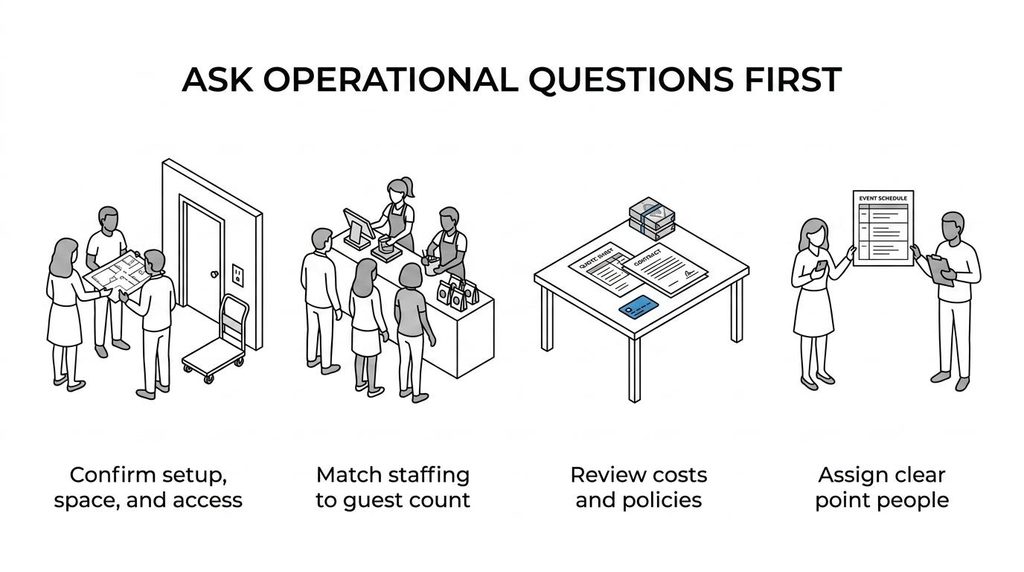
Checklist-style visual showing the main question areas to ask event entertainment vendors before booking: logistics, venue, staffing, guest flow, pricing, policies, customization, and communication.
For interactive entertainment, the stakes are even higher. A custom hat bar, photo activation, perfume blending station, or other hands-on experience has to move people through the experience while keeping quality high. That means guest count, staffing levels, and what each attendee receives should be discussed early, not added later in email threads.
| Question area | What to ask | Why it matters |
|---|---|---|
| Logistics | When do you need access for setup and breakdown? | Prevents venue conflicts and rushed installation |
| Space and venue | What are your footprint, power, and access requirements? | Confirms the activation can function in the room |
| Staffing | How many team members will be on site? | Affects wait times and guest service quality |
| Guest flow | How many people can participate per hour? | Helps match the experience to attendance levels |
| Pricing | What is included in the quoted rate? | Reduces surprise fees and unclear deliverables |
| Policies | What are the deposit and cancellation terms? | Clarifies financial risk before commitment |
| Customization | Can the experience reflect our theme or brand? | Improves event cohesion and guest impact |
| Communication | Who is the main point of contact, and who is on site? | Keeps planning organized and accountable |
Questions to ask event entertainment vendors about logistics and venue access
Start with the simple question many planners skip: “What do you need from the venue, and when do you need it?” The Bash has advised planners to ask about setup timing before signing. That is smart because access windows can make or break a booking, especially at hotels, ballrooms, trade show spaces, and private venues with tight schedules.
A vendor may need an hour, three hours, or an early morning load-in. The issue is not only time. It is elevator access, parking, dock rules, union restrictions, security check-in, and where materials can be staged. If the venue has strict rules and the vendor learns them too late, the event schedule absorbs the stress.
With a mobile activation, venue access becomes even more specific. A hat bar that travels to the event site may include setup, staffing, and breakdown as part of service, but that still requires room to build the station, space for guests to gather, and a clear path to get supplies in and out.
After you have framed the basics, use a short checklist to keep logistics clean:
- Setup window
- Load-in and load-out path
- Power and lighting needs
- Space footprint
- Venue insurance requirements
- Rain plan for outdoor events
Those questions may feel operational, yet they are often the difference between a polished activation and one that starts ten minutes late with guests already waiting.
Questions to ask event entertainment vendors about staffing, guest count, and service flow
Once logistics are covered, shift to guest experience. Ask how the vendor plans to serve your expected attendance, not just whether they are available on the date.
This is where interactive entertainment needs a deeper conversation than passive entertainment. A singer can perform for 30 people or 300 with limited change to the format. A custom hat bar cannot serve 30 and 300 in the same way. Materials, time per guest, and staff capacity all change with scale.
A useful vendor should be able to talk through throughput clearly. If 200 guests are attending, how many are expected to participate? Will everyone make a hat, or only a portion of attendees? How long does the average customization take? What happens when participation spikes during cocktail hour or right after dinner?
Ask direct questions like these:
- Guest count range: What attendance size is this package built for?
- Staff-to-guest ratio: How many team members will be on site to guide guests?
- Throughput: How many guests can you realistically serve per hour?
- Wait times: What is your plan if participation exceeds the estimate?
- Per-person inclusions: What does each guest receive within the quoted package?
- Audience fit: Is the experience best for adults, mixed ages, teens, or children?
These questions do more than help you compare quotes. They reveal how seriously the vendor thinks about operations.
That is especially valuable with an interactive station where guests are creating something they will take home. A thoughtful answer shows that the vendor knows the difference between a pretty concept and a functioning event experience.
Questions to ask event entertainment vendors about pricing and payment terms
Price should never be reduced to a single number in the first email. A better conversation asks what variables drive the quote.
For an activation like a mobile hat bar, cost is tied to real product, real labor, and real logistics. That means the estimate may change based on guest count, hat style selection, embellishment level, staffing, service length, and travel. This type of entertainment is part experiential production and part retail product, so the cheapest quote is not always the best value if it leaves out quality materials or enough staff to serve the crowd well.
The Bash notes that vendor contracts typically cover scope of services and payment terms, and that is exactly where planners should slow down and read carefully. “Entertainment” can sound inclusive, while the actual contract may separate out travel, overtime, branding, setup labor, rush fees, or replacement costs.
Use pricing questions to expose assumptions before they become change orders.
- Base package: What exactly is included in the quoted rate?
- Length of service: How many on-site hours are covered for guest-facing time?
- Setup and breakdown: Are those hours included or billed separately?
- Travel fees
- Overtime rates
- Deposit schedule
- Payment terms: When are remaining balances due?
- Cancellation policy: What happens if the date, venue, or attendance changes?
One more helpful question is, “Can you walk me through the quote line by line?” Strong vendors usually welcome that request. It gives both sides a clean record of what is being purchased.
If the entertainment includes customizable items, ask whether the quote is based on an average participation rate or a guaranteed quantity. That distinction matters. At some events, not every guest joins the activation. At others, the line never stops.
Questions to ask event entertainment vendors about customization and brand fit
A vendor can be operationally solid and still be the wrong creative fit.
This is why planners should ask how flexible the experience really is. Can the entertainment reflect the event’s look, message, and audience expectations? Can the station feel luxe for a wedding, high-energy for a brand launch, polished for a corporate function, or playful for a birthday celebration?
With a mobile hat bar, customization may reach far beyond the hat itself. It can include curated hat styles, patch selections, color palettes, branded pins, logo touches, signage, or display styling that feels consistent with the host’s vision. For corporate groups, brand integration should be discussed carefully so the activation still feels fun and wearable rather than overly promotional.
Ask for photos of past setups that match your event type or guest profile. Ask what elements can be adjusted and what parts of the experience are fixed. Ask whether branded components need extra lead time for production approval.
This conversation is also a test of taste. A capable vendor should be able to guide choices, not just say yes to everything. When that guidance is present, the final guest experience usually feels more intentional.
Questions to ask event entertainment vendors about planning calls and on-site communication
At some point, every successful booking becomes a communication project.
PCMA has advised that key on-site roles should be assigned to people who can join advance planning calls at least 30 days before the event. That recommendation is useful because many entertainment issues stem from unclear ownership. The planner thinks the venue is handling access. The venue thinks the vendor already has instructions. The vendor shows up with questions no one is ready to answer.
Ask who your point of contact will be from booking through event day. Then ask who will actually be on site. Those people are not always the same, and that is fine, as long as the handoff is clear. PCMA has also recommended that a new vendor’s main point of contact have at least two years of experience. That is a practical benchmark for live events where real-time decisions matter.
A planning call should cover timing, room placement, guest count updates, branding approvals, venue rules, and day-of escalation procedures. If a vendor resists planning structure, that is useful information before you commit.
Questions in this category can be simple:
- Who is the primary planner contact?
- Who is the event-day lead?
- When should the planning call happen?
- How do you handle last-minute attendance changes?
- What issues should be escalated to you versus the venue?
One clear point person can save hours of confusion.
Questions to ask interactive entertainment vendors about booking early
Timing changes your options. It changes availability, pricing pressure, customization lead times, and how much room you have to adapt the concept to the event.
Interactive vendors that serve both private events and corporate activations often book up quickly around holidays, conference seasons, and popular wedding months. A mobile hat bar that can handle both intimate gatherings and large corporate events may have broad demand, so early outreach creates more flexibility for everyone involved.
Booking early also helps with branded elements. If patches, pins, custom signage, or other personalized details are part of the experience, production calendars matter. Waiting too long can reduce choice or force rush decisions.
If you are building an event calendar, a simple timeline helps:
- Shortlist entertainment options once the date and venue are tentatively set.
- Request quotes after you have a realistic guest count and event window.
- Confirm logistics and policies before signing, not after the deposit is paid.
- Schedule the planning call once venue details and run-of-show are stable.
That rhythm gives the entertainment vendor what they need to succeed, and it gives the planner room to make strong decisions instead of reactive ones.
The best entertainment vendors are rarely bothered by informed questions. In most cases, they prefer them. Clear questions signal a clear event, and clear events tend to produce the guest moments people remember.