Corporate Event Hat Bar in Las Vegas: Branded Experiences for Teams and Clients
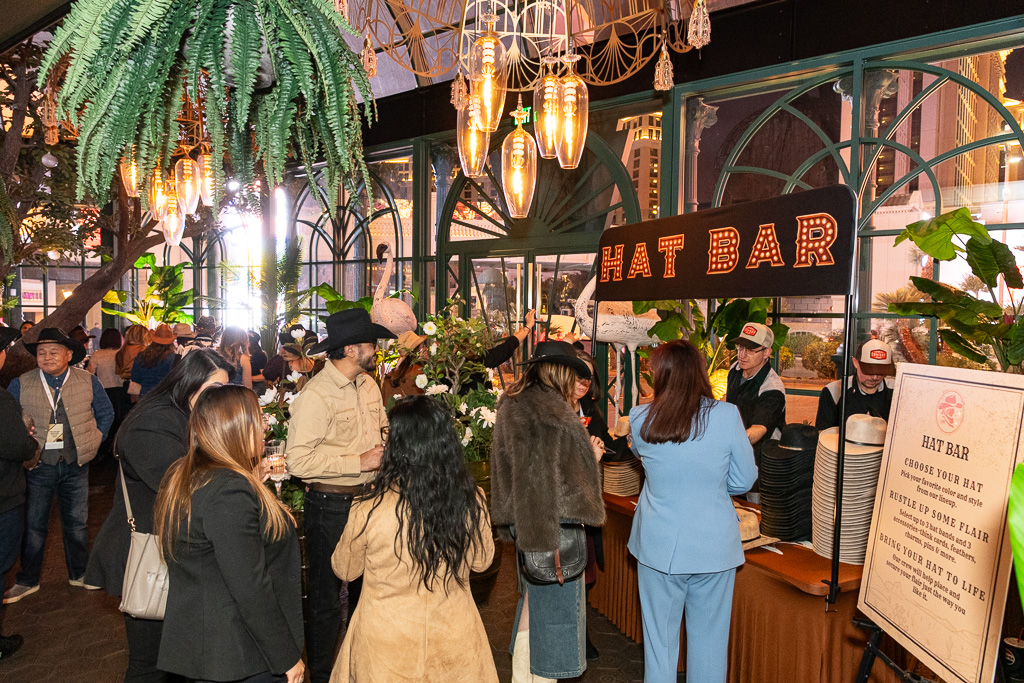
Las Vegas has a way of raising expectations for corporate events. Guests arrive ready for energy, style, and moments that feel worth their time. That is exactly why an on-site hat customization station has become a smart centerpiece for meetings, client receptions, incentive trips, and brand activations: it turns “swag” into a live experience people actually talk about.
A corporate hat bar also fits the modern brief. It is tactile, social, highly visual, and easy to weave into a program without stealing the whole agenda. Guests design something personal, then leave wearing it, which keeps the brand present long after the ballroom lights go down.
Why a hat bar works so well for corporate audiences in Las Vegas
Corporate events ask for two things at once: polished brand presence and real human connection. A hat bar handles both.
First, it creates a natural social hub. When people are choosing hat shapes, comparing patches, or asking a stylist to weigh in, conversation starts without forced icebreakers. Second, it upgrades the perceived value of a takeaway. A hat feels more like a keepsake than a tote bag, and because it is chosen and built by the guest, it carries emotional weight.
There is also a practical advantage. A hat bar activation can be scaled for an intimate leadership dinner or a large conference reception, then run as a steady-flow station while the rest of the event continues.
What “branded” really means (without making it feel like a billboard)
Branding at a hat bar is strongest when it feels curated, not compulsory. The best corporate executions give guests freedom to create while keeping the brand visible in clean, intentional ways.
A few approaches tend to land well with both internal teams and clients:
- Logo patches and pins: Embroidered patches, chenille letters, metal pins, or a small slogan detail that reads well in photos.
- Color story: Base hats in black, cream, navy, or brand hues, paired with coordinated bands and accents.
- Station styling: Table covers, signage, sample hats, and a photo moment that match the event’s visual system.
- Packaging: A branded keepsake bag adds a final touch and makes hats easy to carry through casinos and airports.
This is the balance that matters: guests should feel like they designed a hat they genuinely want to wear, while the brand shows up in a confident, refined way.
How the hat customization workflow runs on-site
A corporate hat bar is essentially a guided design line, run by trained stylists. Raising the Hat Bar, based in Las Vegas, structures the experience so guests can move from “I have no idea what I want” to “This is perfect” quickly.
The flow is simple, which is why it works in high-traffic event windows:
- Guests start by selecting a base hat style (trucker, rancher, cowboy, felt, straw, and other curated options depending on the event).
- A stylist helps the guest choose embellishments: bands, pins, patches, chains, feathers, florals, cards, or other themed elements.
- Brand elements can be applied during the build, including logo patches, logo pins, or heat-applied logos where appropriate.
- The hat leaves on the guest’s head or in a keepsake bag.
That structure keeps the station moving while still giving every guest a “designed for me” result.
Picking the right hat style for your crowd
Hat choice is not only an aesthetic decision. It affects how fast guests decide, how easy it is to brand, and whether the final product fits your audience’s everyday life.
The table below is a useful starting point for matching style to event goals.
| Hat style | Look and vibe | Branding placement that reads well | Great fit for |
|---|---|---|---|
| Trucker | Casual, modern, easy to wear | Front patch, side pin, small heat logo | Conferences, trade shows, large receptions |
| Rancher (wide-brim) | Fashion-forward, statement piece | Band detail, side patch, subtle pin set | Client VIP events, incentive trips, upscale mixers |
| Cowboy | Vegas heritage, bold and playful | Band + patch combo, pin cluster | Western themes, awards nights, brand parties |
A mixed menu often performs best: truckers for quick throughput and broad appeal, plus a fashion-forward option for guests who want a more elevated silhouette.
Designing for teams and clients at the same event
Many corporate events in Las Vegas blend internal culture building with external relationship building. A hat bar can support both if the brand plan includes a little “two-track” thinking.
One track is for clients, partners, and VIP guests: cleaner designs, premium-feeling patches, restrained palettes, and a photo area that looks polished. The other track is for employees: more playful options, bolder trims, extra patches, and maybe a team challenge or moment of friendly competition.
A simple way to organize it is to pre-curate embellishment trays by theme. You can keep branded elements consistent across all trays, then vary accent pieces by audience. That keeps the brand coherent while letting personality show up.
What event planners should decide early
A hat bar is straightforward to book, yet the best results come from making a few decisions before floorplans are finalized. The key is to plan around flow and visibility.
Think through these fundamentals:
- Space and placement: Put the station where people naturally circulate, near a bar, lounge, or sponsor row, not tucked behind staging.
- Time window: A hat bar shines during receptions and networking blocks when guests can come and go.
- Brand guardrails: Decide what must be included on each hat (maybe one small logo pin) versus optional brand elements.
- Throughput goals: Your expected guest count should inform station size, staffing, and how much customization is offered per person.
A hat bar is a live production. When planners treat it like a featured activation, not an afterthought, lines stay manageable and the photos look intentional.
A practical way to measure ROI beyond “people seemed to like it”
Corporate planners often need proof that an activation did more than entertain. A hat bar gives several measurable signals that tie directly to brand and engagement.
You can track impact through:
- Wear rate: How many guests leave wearing the hat, then continue wearing it during the event week.
- Brand recall: Promotional product research has shown high brand recall for physical items, with one study citing 85% recall for the advertiser behind a promotional product. Hats that people keep and re-wear tend to push that effect even further.
- Social content: Count posts and stories that show the hat, the station, and the branded backdrop.
- Dwell time: Compare how long guests stay in the activation zone versus nearby areas with passive giveaways.
If the event includes lead capture or meetings set, the hat bar zone can also be used as a “soft magnet” that keeps qualified conversations happening longer.
Making it inclusive for guests who are not “hat people”
Even great activations need an opt-in path for different preferences. Some guests love a wide-brim look. Others never wear hats and do not want to start at a work event.
Raising the Hat Bar addresses that reality with a parallel Wig & Glitter experience, giving guests another creative option that still fits a high-energy Las Vegas setting. For corporate groups, it is also a smart crowd-management tool: it splits traffic into two stations while keeping the experience cohesive and photo-ready.
Here are a few inclusive design moves that keep participation high without pressuring anyone:
- Offer multiple silhouettes: Include at least one low-commitment option like a trucker cap alongside fashion-forward wide brims.
- Keep branding modular: Use pins and patches that can be added or skipped without “ruining” the design.
- Create a photo moment for everyone: A branded step-and-repeat works for hats, wigs, and groups.
When people feel free to choose their level of visibility, they participate more willingly, and the brand association stays positive.
How to keep the brand tasteful while still unmistakable
Corporate teams sometimes worry that a customization station could drift off-brand. The fix is not to restrict creativity. It is to curate the ingredients.
A clean brand system for a hat bar usually includes:
- A defined palette of base hats that matches brand colors or event neutrals
- Two or three branded elements that are consistently available (logo patch, logo pin, heat logo option)
- A set of complementary accents that support the theme without overpowering the logo
- Sample hats displayed as “style north stars” so guests see what a great finished piece looks like
That last piece matters more than many planners expect. When sample hats show a range of tasteful outcomes, guests follow the visual cues and the station produces hats that look cohesive in group photos.
Why this activation feels made for Las Vegas
Las Vegas rewards experiences that are bold enough to be memorable and polished enough to feel premium. A corporate hat bar sits right in that sweet spot. It can nod to Western heritage without becoming costume, it can look high-fashion without feeling precious, and it gives teams and clients something to do with their hands while conversations develop naturally.
For planners who want a branded moment that guests will actually keep, wear, photograph, and talk about, a mobile hat bar in Las Vegas is a strong move, and it fits everything from conference schedules to cocktail-forward client nights.