How to Choose Hat Sizes and Fits for Diverse Guests
Choosing hat sizes for an event is a little like choosing music: you can have great taste, but the room still needs the right volume and tempo. With hats, the “volume” is fit. When fit is right, guests relax, take photos, and keep the hat in rotation long after the event. When it is off by even a small amount, a beautiful design can end up feeling like a prop.
Events add a twist because you are fitting a range of head sizes, hairstyles, comfort preferences, and style goals in a limited window of time. The good news is that hat sizing is measurable, teachable, and very manageable with a smart plan.
Start with the one measurement that matters most
Hat fit begins with head circumference. Measure with a soft tape placed around the head about 1 cm above the ears and just above the eyebrows. The tape should be snug, not tight, and it should sit level all the way around.
If you are planning a hat activation, build your sizing plan around this single measurement. Everything else like face shape, brim width, crown height helps with style and comfort, but circumference is the foundation.
A few quick notes that help in real event settings:
- Measure over hair the way the guest will wear it (down, ponytail, braids, wig), not how you wish it were for “accuracy.”
- Take the number twice. If it changes, the tape likely shifted or the tension changed.
- Aim for repeatability, not perfection. Consistent measuring beats a heroic one-time measurement.
Translate measurements into sizes guests recognize
Different hats show size in different ways: numeric (US/UK), centimeters (EU), or lettered sizes (S, M, L). Guests rarely care which system you use, but they do care about comfort and confidence. A simple conversion chart on-site keeps the line moving.
Below is a practical reference table that works well for event planning. Always confirm your specific hat models, since “Medium” can vary by maker.
| Head circumference (cm) | Head circumference (in) | Common EU size | Common US/UK size | Common letter size |
|---|---|---|---|---|
| 54 | 21.3 | 54 | 6 3/4 | XS |
| 56 | 22.0 | 56 | 7 | S |
| 58 | 22.8 | 58 | 7 1/4 | M |
| 60 | 23.6 | 60 | 7 1/2 | L |
| 62 | 24.4 | 62 | 7 3/4 | XL |
If your event includes visitors from different regions, centimeters are often the easiest neutral language. People may not know their hat size, but they can understand a number you just measured.
Build an event inventory plan, not a retail shelf
Event sizing is about coverage, not a perfect match for every individual out of the box. Your goal is to have enough base hats across a range, plus simple fit tools to fine-tune on the spot.
Before the event, gather quick intel so you can stock wisely and set expectations about choices.
- Approximate guest count
- Indoor vs. outdoor venue
- Average time per guest you can support
- Event theme and dress level
- Photo moments (step-and-repeat, stage walk-ons, group shots)
That short checklist keeps sizing tied to the real flow of the event. A high-volume corporate reception has different needs than a seated dinner with longer customization time.
Crown height and head shape affect comfort more than people expect
Two hats can share the same circumference yet feel completely different. That difference often comes from crown height and overall shape.
A deeper crown gives more interior space. Guests with larger heads, thick hair, or a longer head profile often feel immediate relief with a taller crown because pressure spreads more evenly. A shallow crown can “perch,” even when the circumference technically matches.
Head and face shape also influence what feels flattering:
- Oval: most styles tend to work, so comfort is the deciding factor.
- Round: taller crowns and more angular lines can add definition.
- Square: softer crowns and gentler curves can balance stronger angles.
- Heart-shaped: medium brims and structured caps can create balance.
- Long/oblong: wider brims and shorter crowns can add horizontal proportion.
At an event, you do not need to label someone’s face shape. You simply offer options and let the mirror do the work.
Plan for diverse guests with respectful flexibility
Diverse guests means diverse priorities. Some guests want a statement piece. Others want something subtle, breathable, and easy to wear. Some need extra room for hair volume. Some prefer a lighter feel or minimal pressure on the forehead.
A strong approach is to offer a few base silhouettes that cover most preferences, then use fitting tools to dial in comfort. A mobile custom hat bar setup works well here because sizing and adjustments can happen as part of the design moment, not as a separate “fitting station” that slows the line.
In Las Vegas, where events often shift between hot outdoor moments and cold indoor air conditioning, material choice matters too. Mesh-backed trucker styles can feel cooler, while felt or structured wool options can feel more polished for evening settings.
Use simple fit tools that make one hat work for more people
Even with great inventory planning, real heads are wonderfully variable. That is why professional fit tools matter. They turn “close enough” into “this is mine.”
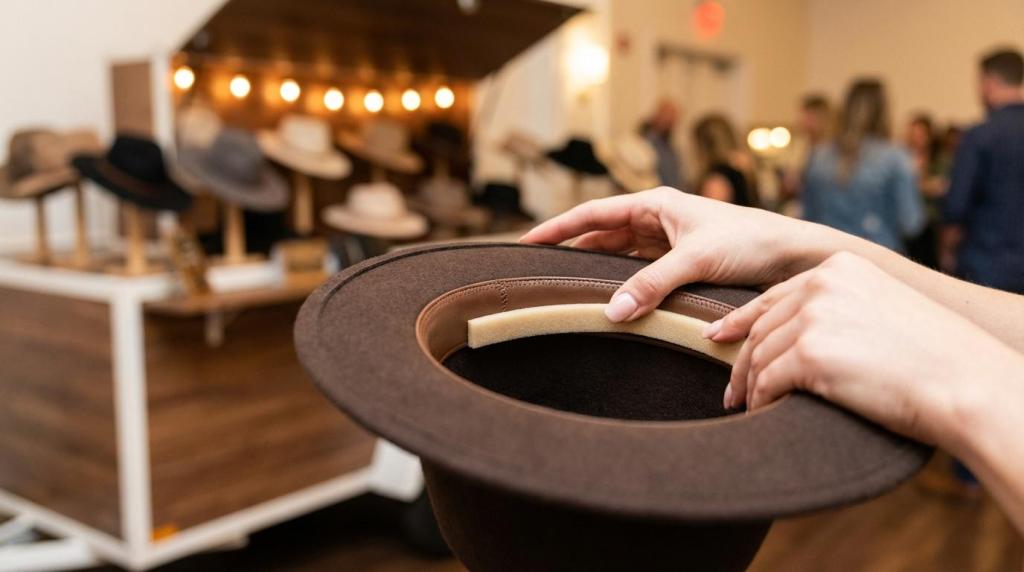
A well-prepared station usually includes sizing inserts or foam strips that sit behind the sweatband, plus quick checks that confirm the hat is secure without squeezing.
A good on-site fitting process is fast, calm, and consistent:
- Position: Set the hat so it sits level, not tipped back unless the guest requests that look.
- Pressure check: Confirm there is contact all around with no sharp pressure points.
- Movement test: Ask the guest to gently nod and turn their head to see if the hat shifts.
- Adjustment: Add inserts to reduce small gaps or improve stability.
- Comfort confirmation: Make sure the guest can smile and talk without feeling their forehead is being pinched.
Those steps protect the guest experience because they prevent the two most common event problems: hats that slide off in photos and hats that feel tight after ten minutes.
Manage line speed without sacrificing the “custom” feel
Sizing can either be a bottleneck or a confidence-builder. The difference is structure.
A smart flow is to measure early, then let guests choose their hat style and customization while the base size is being set. This keeps hands busy and attention engaged, rather than creating a single slow step that everyone waits for.
If you are hosting a guided hat bar activation, one advantage is having staff who can measure, suggest shapes, and adjust fit while the guest makes design choices. Raising the Hat Bar, for example, is built around on-site fitting with measurement tools and inserts, plus a quick fit check at the end so the finished hat feels like an everyday piece rather than a one-night novelty.
That “fit check” is not a small detail. It is often the moment when a guest’s posture changes and they start taking selfies.
Common fit problems at events and how to prevent them
Most fit issues are predictable, and a simple script helps staff handle them without making guests feel self-conscious.
- Hat feels tight immediately: Try a slightly larger size or a deeper crown; remove any inserts; confirm the hat is not sitting too low on the forehead.
- Hat slides backward: Check that the hat is level; add thin inserts at the back; confirm hair products or very smooth hair are not reducing grip.
- Hat sits too high or “perches”: Move to a deeper crown or a different silhouette; confirm circumference is not too small.
- Pressure point at the front: Shift the hat slightly; confirm the sweatband is smooth; test a different crown shape.
When your team treats these as normal tuning steps, guests relax. The goal is to make fit feel like part of the craft.
A practical stocking mindset for planners
If you are deciding how many sizes to bring, think in ranges and adjustments. You do not need every size in equal quantity. You need the middle sizes covered well, plus enough small and large options so nobody gets pushed into discomfort.
A typical event plan aims to carry:
- A solid core in the mid-range
- Some smaller options for petite heads and youth guests
- Some larger options for guests who routinely struggle with “one size fits most”
- Inserts to fine-tune downward when a hat is slightly big
This approach also supports guests with high-volume hair because you can size up for comfort, then stabilize with light inserts instead of compressing hair under a tight band.
Make the measuring moment feel stylish, not clinical
Guests are at your event to have fun and feel seen. Measuring can still feel premium if it is presented as part of the styling ritual.
A simple way to frame it is: “Let’s get your base fit right first, then you can design without worrying about it moving.” That sentence sets a confident tone and signals that fit is part of the finished look.
If you want an even smoother experience, a small sign near the station can tell guests how measurements work (above the ears, above the eyebrows) so they know what to expect. It reduces hesitation and speeds up the first interaction.
Fit is the difference between a favor and a personal signature
Custom hats are memorable because they let guests make a choice, then wear that choice home. Size and fit are what make the hat feel like it belongs to the guest, not to the event.
If you are planning an activation, prioritize circumference measurement, bring a range of crown shapes, and rely on inserts for fine tuning. The payoff is immediate: confident guests, better photos, and keepsakes that get worn again.